Wednesday, August 3, 2022

Wintering This Summer


Every summer, our school has an all faculty read that unites us together during one of our first pre-planning, back to school meeting days. This practice is not uncommon throughout schools nationwide.

Some years we have one book that we all read and have central focuses around. We did that in years past with the books Educated: A Memoir by Tara Westover, Creating Innovators: The Making of Young People Who Will Change the World by Tony Wagner, Making it Stick: The Science of Successful Learning by Peter C. Brown, and others.

Some years, we have a collection of 3 or 4 books to choose from so that we can find something that is more specific to our own needs and interests. This is often the preferred summer read simply because of the power of choice. (A good reminder to us teachers the power of that in our own classrooms too.) When we are back to school, we divide ourselves by book and discuss certain tenants of the book. A back to school book club.

This year, was a year of choice, and our 4 our book titles were:
I chose Wintering to read this summer. One of the reasons I chose this book is because I had already read both Lisa Delpit's book and Clint Smith's book. (Both of which I highly recommend!)

Two, after the now-three years of Covid, pandemic, quarantine, and "re-entry," it certainly felt like we all had been through a collective "wintering" worldwide. And we are emerging at different rates. The end of the past two school years has felt for me like an exhausted crawl to the finish line. Rest is necessary.

Thirdly, summer for teachers is always a bit of a wintering season. Recovery, recouping, rejuvenating, and definitely resting. It's a far more exhausting profession than many people think. One certainly made more difficult with Covid.

But lastly and most personally, I knew that mid-July I was going to have a total knee replacement--with a second one still ahead on the horizon based on x-rays and deterioration alone, I knew this would mean I would certainly have a summer like no other. No pool (my most favorite place) from surgery day until the incision heal (4-6 full weeks). I'd be living with limited mobility while I regained my strength. I knew it was inevitable that I'd be wrestling with pain and that lack of feeling in control--both of which I don't do well with! I would need to slowing down and let my body lead the way. This summer was going to need to be a needed season of rest and healing. Perhaps the book Wintering would help me get into the proper mindset to work my way to healing: physically, mentally, emotionally, and spiritually. 

The book is part biographical as Katherine May explains some different times in her life that she has had "seasons of wintering." Some truly due to her current geographical location where winter is winter. Some were due to life occurrences where rest and repair was necessary in one way or another. My favorite part of the book was the first chapter where she sets the stage and explains the purpose. Everyone "winters" at some point--or many points. Life takes us through difficult seasons, and it is a normal and natural part of life. Try as we might, we can't escape it; but, just like the world, we flourish after this remote season, yet it is also a season leading to rebirth. 

This quote in chapter one particularly spoke to me, particularly when it comes to healing. Healing from Covid and the loss that quarantining and the pandemic brought. Healing of my knee, now titanium and strengthening daily to move me beyond the restrictive arthritis that was hitting (in my personal opinion) wayyy too early and has limited me more and more over the past 5 years. 

"Plants and animals don’t fight the winter; they don’t pretend it’s not happening and attempt to carry on living the same lives that they lived in the summer. They prepare. They adapt. They perform extraordinary acts of metamorphosis to get them through. Winter is a time of withdrawing from the world, maximising scant resources, carrying out acts of brutal efficiency and vanishing from sight; but that’s where the transformation occurs. Winter is not the death of the life cycle, but its crucible. Once we stop wishing it were summer, winter can be a glorious season in which the world takes on a sparse beauty and even the pavements sparkle. It’s a time for reflection and recuperation, for slow replenishment, for putting your house in order. Doing those deeply unfashionable things—slowing down, letting your spare time expand, getting enough sleep, resting—is a radical act now, but it is essential. This is a crossroads we all know, a moment when you need to shed a skin. If you do, you’ll expose all those painful nerve endings and feel so raw that you’ll need to take care of yourself for a while. If you don’t, then that skin will harden around you. It’s one of the most important choices you’ll ever make." (Wintering, page 14)

I will say, that even though I am indeed wintering this summer, if I'm authorized to return to school in time for these back to school book club meetings, I think my plan is to actually jump groups by rereading "Teaching When the World Is On Fire" and going to that book talk. That book has spoken to me in so many ways over the past years and sometimes with current events still seems very relevant to both myself and our students, But, I definitely am taking the lessons of wintering and trying to really connect with what I need--more water, a nap, ice, sitting outside,  a bit of walking about, a physical therapy session, or time to just sit and watch a good show or read an great book. And with hope, I'll be stronger, wiser, and more centered and sustainable on the flip side....ready to winter again when it comes time to tackle that other knee of mine. It is completely cliché but equally true: if you don't have your health, you have nothing.

Photos created at www.canva.com. Book title pictures from images from www.amazon.com per title.

Saturday, July 30, 2022

National Geographic Explorer Mindset


I love this graphic I found online, created by Caroline Little. I feel it encapsulates everything from environmental stewardship to innovation to global awareness. May we all adopt this.
For a printable, downloadable copy, click here.

Image from https://www.facebook.com/natgeoeducation/photos/a.430080388619/10159937568083620/

Wednesday, July 27, 2022

Minimizing Microfibers

All roads lately seem to keep coming back to the Plastic-cyclopedia post I wrote several weeks ago. Especially this Plastic Free July!

If you recall, microfibers were one of the five variations of microplastics. They are the shed that comes off in the washer and dryer from your fleece and polyester-blend clothing. They are essentially the furballs of our clothing that wash down our sinks and make their way to our waterways and ultimately our marine life, easily mistaken as phytoplankton or zooplankton....which then becomes circular (in completely the wrong way) and perhaps wind up in our seafood dinner.

Eco with Em (Australian author and illustrator Emily Ehlers) has posted some dynamic illustrated infographics on microfibers. May her art inspire you to take notes of your own shedding and furballs.

Art from https://www.facebook.com/photo?fbid=588808779281329&set=pcb.588808852614655 


Saturday, July 23, 2022

Suzanne Simard's TED Talk: "How Trees Talk to Each Other"

Looking up at my backyard trees, sitting in the shade with the wind in my hair, I listened to Suzanne Simard's 2016 TED talk, "How Trees Talk to Each Other." Seemed a fitting environment to be absorbing her talk on the power of trees. It reminded me of my "Tree Talk" post from October 2019.
 
 
Interdependence between tree species and other plant species through their root connections was a large part of Simard's TED Talk. It also struck me in my reflections on how it's a parallel for how we are also interdependent with each other--humans to humans-- but also humans and nature. 
 
Trees, like us, learn and grow from each other on a cellular level. It adds to the resilience of forests. We too are networked together. Families. Neighborhoods. Communities. Countries. Internet connections. Human connections. Global connections. Complex systems. We need each other to learn, to grow. 

 Diversity of ideas is just like biodiversity: it makes the environment is healthier. 

To read more about Suzanne Simard, trees, and the forestry science, check out her book Finding the Mother Tree: Discovering the Wisdom of the Forest. Or, go check out her feature from June 26, 2020's NPR Radio Hour.
 

Wednesday, July 20, 2022

Rockhounds Abound

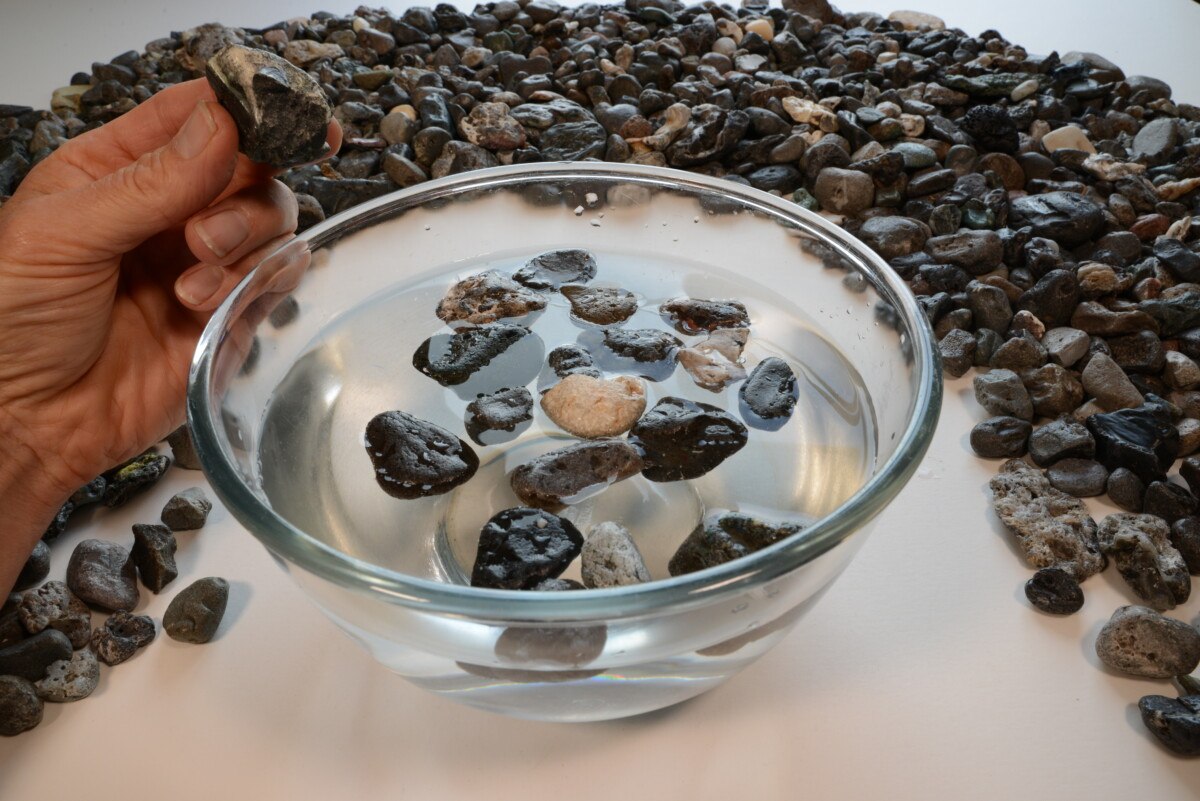
As a kid, I was a "rock star." Kind of! I wasn't into the traditional rock and roll music of the 1970s. (I was probably more of a fan of what's now called "Easy Listening" versus "Classic Rock.") But in 4th grade, I was definitely a fan of rocks. I knew them all and could tell you if they were igneous, sedimentary, or metamorphic. I'd hunt our rock bed that surrounded the shrubbery in the front yard and dig up some finds, then go talk rocks with my chemical engineer dad. I had a bit of a collection and I remember going to the gem and mineral shows every now and then on Saturday afternoon outings. 

Riverbeds by streams? My eyes still constantly search for the perfect rock skipping stone. My dad could skip them like a champ. My son is following in his footsteps well.

Yes, I was (and maybe still am) a bit of a rockhound.

In the vein of Plant Snap and Cornell's Merlin bird app, there are also apps out there for rock collectors. 

I ran across an advertisement for Rock Identifier: Stone ID and it brought back these memories. When I came here to write about it, I discovered upon looking it up that it seems like there's a few apps out there that satisfy the same need for rock identification. The Educational App Store has write ups for 6 apps (including the one I mentioned above) for you to find the one that best serves yours or your classroom needs. Their reviews include the following apps:
  • Stone Identifier Rock Scanner Rock Identifier
  • Rock Identifier: Stone ID
  • Geology Toolkit 
  • Minerals guide: Rocks, Crystals & Gemstones
  • Geology Rocks – Handbook of Rocks
  • Rockcheck
I also did run across this video analyzing some of the popular apps. This helps give some more details to those visual folks out there. I found it fascinating watching "Agate Ariel" and her predictions, and her expertise too. She has a follow up video to the one below that goes more old school and talks about how she identifies rocks (without an app). She has a pretty extensive YouTube channel (with 3.6K followers!) with other informative videos as well.


Whether you decide to use tech and an app mentioned above or go old school like Agate Ariel, what a great way to get outside, go on a quest, cure that nature deficit disorder, and do a bit of rockhounding yourself!

Saturday, July 16, 2022

Online Museum Resources for Educators

Every teacher I know loves to land on good resources. 

And every teacher I know, their wheels are always spinning, thinking creatively about their craft. Summers included!

All of this is probably why this Edutopia article jumped out at me. In the Edutopia June 16, 2022 article entitled "6 Museums With Exceptional Teacher Resources," Tanya Brown Merriman shares some digital archives, online lesson plans, virtual field trips, and professional development opportunities.  Not only do they list some great brain activating ideas to implement into the classroom, but these museums definitely are a visual feast and appeal to the lifelong learner! 

Museum resources to check out in Tanya Brown Merriman's article, where you can get an in-depth glance at all these museums have to offer. She includes a resource spotlight and classroom activities as well as a link to each of the following museums :
  • The Metropolitan Museum of Art (New York, NY)
  • Indianapolis Chidlren's Museum (Indianapolis, IN)
  • The Museum of Memory & Human Rights (Santiago, Chile)
  • The American Museum of Natural History (New York, NY)
  • The Columbus Museum of Art (Columbus, OH)
  • The Smithsonian Institution (Washington, DC
And people think teachers just lounge around all summer, eating bon bons! Not quite!!

Image created on www.canva.com

Wednesday, July 13, 2022

Biodegradable Mushroom Packaging

I find that mushrooms are one of those things most people have strong feelings about--they either love them or they hate them. I personally have had a lifelong NOT love affair with them. It's a texture thing, I don't like them at all, and as my mother (a mushroom fan) will attest--I never did!

But, I think I might have found my favorite use of them yet. They are being used more and more in biodegradable packaging. As a person who has an equal detest for packaging, this may be my personal equivalent of 2 "wrongs" that do indeed make a "right." It can replace those big evil styrofoam blocks we find in hundreds of products we buy. Styrofoam, which is the branded [but more known] name for polystyrene foam, is made of plastic which comes from the limited resource of petroleum. We all know how hard that resource is hitting us at the gas pumps these days!

Using mycelium (a fungus--which, of course, is plant based--and is the root structure of mushrooms) with hemp hurd (a byproduct of the hemp fiber industry), companies such as Ecovative Design can create molds for packaging. Several years ago IKEA made a commitment to biodegradable mushroom packagingIKEA has a deep commitment to environmental sustainability, so it should be no surprise that this is one of their initiatives. But, IKEA is not alone in in using this type of biodegradable packaging. Dell and Crate and Barrel are also on the mushroom bandwagon. Here is a video from Ecovative Design that shows the making of these mycelium molds.

When the mushroom-packed product gets to your house, you can break apart the packaging and put it out in your yard, compost, or garden and it will decompose in a few short weeks. Additionally, it adds nutrients to your soil. Styrofoam, which takes 500+ years to biodegrade and is a carcinogen, certainly can't do that.

This type of packaging being around for more than a decade. Given that, we should be seeing more of it than we do. But the good news, according to Ecovative Design's blog, they are growing (not to mention, they earned $60 million in 2021), which means it is becoming more and more commonplace. I "root" for more mushrooms than ever before! (Pun intended!😊)

Videos from https://youtu.be/zw2O1PhrzA0 and https://youtu.be/zmDENxTPn8Q and picture from https://www.sourcegreenpackaging.com/mycelium-packaging-styrofoam-alternative/

Saturday, July 9, 2022

Revisiting the Plastic-cyclopedia

After brushing up on our vocabulary a week ago with the Plastic-cyclopedia post, this mockumentary "commercial" post about "plastic soup" felt like the perfect follow up. Especially since it's Plastic Free July.

Yum, who doesn't want a bowl of that! ðŸ™„

I've been doing some digging for an upcoming one day summer class I am teaching with a coworker: "Building Global & Environmental Citizens in Our Classrooms" where we are doing a deep dive into the United Nations Sustainable Development Goals (more on that in a future post). Along the way with that research and also while I was doing a deep dive into plastic vernacular from my previous post, I landed on this article by Maria Westerbos (Founder & Director of the Plastic Soup Foundation): "How the Sustainable Development Goals Can Help Fight ‘Plastic Soup’-- 3 Actions Key to Curbing Plastic Pollution Around the World. In it, she noted show fighting oceanic plastic hits the following goals indirectly:


  • #3: Good health and well-being--Our sea life won't be consuming toxic materials, which creates healthier food for humans.
  • #6: Clean water and sanitation--Just take a look at that Plastic Soup video again for verification on this one!
  • #11: Sustainable cities and communities--The lack of pollution will help eliminate toxic environments.
  • #12: Responsible consumption and production--Eliminating a throw away mindset leads to the betterment of the planet.
  • #13: Climate action--Plans for addressing climate change lead to a healthier planet.
  • #14: Life below water--Plastic is detrimental to sea life.
  • #15: Life on land--Smarter decisions regarding litter and plastic consumption overall will help create a cleaner environment.
Thin plastic (such as bags) could potentially photodegrade in a year in sunlight....but especially in a landfill, it could take upwards of of 500 years or more to decompose. One plastic cup could certainly become a multi-generational problem given those statistics. As I think of my fridge alone, I see plastic everywhere I look: the dreaded individually wrapped cheese (which I hate to buy but sometimes have no other options), milk containers, salad dressing jars, mustard containers, and more.

As Ms. Westerbos recommends in her article, the three things we need to do our best to do is:
  • Keep plastic from entering our environment (what I like to call "refuse" -- the 4th of the 3 R's);
  • Avoid health risks such as plastic products leaching into foods, beverages, and even the soil;
  • Reduce comes before reuse which comes before recycle in the 3 R's.
Some of this starts with better waste management. (Recycling should be too much easier! Each municipality has its own rules based on its own sorting equipment, and often times it's as clear as mud, making me wonder if we are all wishcycling!!!) 

Additionally, in a world where the price of gasoline is downright ridiculous right now, what are we doing using so much petroleum on useless, single-use plastic?!

The Plastic Health Coalition is a good place to turn--companies dedicated to helping fight for the solution to our planetary plastic problem! Research and innovation to help solve the problem is always a good place to start! Likewise, it reminds me of this quote and how we each need to be starting individually--in our homes, places of work, communities, local and national governments!

Wednesday, July 6, 2022

Plastic Free July


When I was creating my July post of holidays, one actually slipped under the radar and missed mention: Plastic Free July.

Dating back to 2011 in Perth, Australia, Plastic Free July and the Plastic Free Foundation have gone global as a committed force to reduce plastic waste. It's estimated that 140 million people participated last year from 190 countries. [Go Australia--the country that also started the very first Earth Hour in 2007!]

From their "About Us" page on their website:
"We’re proud of how this impact addresses UN Sustainable Development Goals 11, 12, 14 and 15 (sustainable cities and communities, responsible production and consumption, life below water, and life on land)."

Best part too: it doesn't just have to be a "July thing."


To challenge yourself, take their "Pesky Plastics Quiz."

Check out the UN Sustainable Development Goals -- especially #11, #12, #14, & #15.

Watch Rebecca Prince-Ruiz's TEDx Talk "How A Global Movement Started in a Kitchen."


Get inspired by what you can do with their "Get Involved: What Can You Do" page.

Small changes ALWAYS make big differences!

Saturday, July 2, 2022

July Holidays Ahead

July marks the official "halfway through the calendar" time of year. In some ways, the 4th of July marks that "halfway through summer" place (especially for students and teachers, where the summer goes too fast to begin with!)

Here at the cusp of the 4th of July weekend, while you are celebrating your patriotic pride and the lazy, hazy days of summertime, here are a few other holidays on the horizon this month. I found the fun facts and dates on NationalToday.com--a festive website with serious and silly holidays and it can definitely take you down the rabbit hole of marking your calendar with some good ones! Each holiday has a detailed timeline graphic to give you the history of how it came to be (along with some important milestones per holiday)  : 

American Independence Day is July 4th annually. But, did you know that July 2nd is Made in the USA Day. Makes sense given the theme of the holiday weekend and putting our shopping dollars into purchasing American-made items. The day was created by Joel Joseph of the Made in the USA Foundation and first celebrated in 1989. That's also when the "Made in the USA" label started to appear on products.


National Clean Beaches Week falls during the first week of July on the 1st through the 7th. Since beaches are often are the place where folks land for the 4th of July, it makes sense. Sadly too, it makes sense that a lot of people often come with a lot of litter. So definitely a time to spruce up our shorelines, especially to keep that waste from becoming polluting marine debris. This annual event started in 2003 and has the support of many coastal communities to keep beaches, shores, and marine animals healthy!


July 11th is World Population Day. Overpopulation is the cause of many of our environmental issues. The more people we have, the more resources we use. That impacts gender equality, human rights concern, poverty, food, energy, and more. It was named Five Billion Day in 1987 (when the global population hit that number). From there, the United Nations Development Program established world Population Day in 1989, and it was officially voted as a UNDP day December 1990. Here in 2022 at this writing, we are very near 8 million, a number that changes literally by the second. You can discover the exact count by checking out World Population Clock, which shows you that second-by-second count.


World Nature Conservation Day falls annually on July 28. The emphasis on the day is making sure to maintain and preserve healthy environments and take care of our planetary natural resources. Not only does this take care of the flora and fauna, but all of that impacts clean soil, water, and air--and human health! Industrialization, deforestation, and other human impacts diminish our natural resources and biodiversity and impact the effects of climate change. 


July 29th marks International Tiger Day. Our largest of the "big cats," tigers also are faced with habitat loss, hunting, and poaching, and invading human impact, numbers are on a high decline. This day was created in 2010 when numbers revealed that 97% of all wild tigers population had depleted over the previous 100 years, leaving approximately 3000 tigers in the wild and tigers at the risk of extinction.

By noting these dates on our calendar, we can help raise awareness, funds, and potential solutions to these "environmental" holidays.


All banner icons created at www.canva.com.

Friday, July 1, 2022

SCOTUS’ Latest Environmental Ruling

The United States Supreme Court has had a wingding of a week. (Insert eye roll here! 🙄🙄)

I defer to our 44th president for his grace and wisdom. And hope somewhere along the way we, as a country, wise up.  This is where individuals and companies and communities need to take the lead! 


Barack Obama’s quote from his June 30, 2022 Facebook page:https://www.facebook.com/100044322825129/posts/pfbid0DjzpGoEEfvD2AaT4Bp6jUeCy2jCHyXK8Hu6pQr8xmTaM5kUmAKSMNpQzVpfm3EyHl/?d=n 

Wednesday, June 29, 2022

A Plastic-cyclopedia to Ponder

Marine debris. Microplastics. Pyroplastics. Plasticrust. Plastiglomerate. Anthropoquina. Plastic soup.

Plastic pollution comes in all sorts of new names and sizes. As plastic use continues over time, we get a new idea of how it breaks down and what kind of plastic waste it leaves behind. It's seemingly becoming a whole new level of plasticized geology, that needs to come with its own glossary to define this new vocabulary, some of which sounds a bit like a foreign language:

Marine debris:
We've known about marine debris for a long time and it is the most synonymous with oceanic and waterway pollution. It it is not limited specifically to plastic, and can include aluminum soda cans, fishing gear, even abandoned boats It' typically is anything solid and of any size that winds up in a waterway. It can break down over time from the water or the sun. We often see it wash up on the shores, and it can travel from streams to rivers to lakes or oceans. The Great Pacific Garbage Patch (along with these gyres in all other oceans as well) wind up being the dumping ground for such objects.

Microplastics: Microplastics are any kind of plastic that is smaller than 5 millimeters. Due to their small size, they can be ingested by marine organisms when they get washed through our water systems and waterways. There are 5 different types
  • Fibers: These largely come from fleece or poly-blend clothing, diapers, and cigarettes. Most of them enter our waterways through our washing machines. Given they come from materials that are not natural, they do not biodegrade and they are not filtered out of wastewater treatment plants.
  • Microbeads: These tiny items are less than a millimeter in diameter. They are often found in cosmetics, lotions, or face creams as exfoliants and easily drain down the sink. They are often mistaken as food by marine animals one they get into our waterways. They are not fully digestible and are often toxic.
  • Fragments: These are small pieces of plastic that break off larger items. Typically they come from single-use items like plastic cups, silverware, lids, toys, or a myriad of other items. The sun continues to photodegrade them into smaller items. These too can be mistaken as food by smaller animals.
  • Nurdles: Nurdles are small plastic pellets purposely made by companies in order to create bigger, plastic-created items such as storage bins and lids, garbage cans, and more. Depending on how they are handled in a facility by humans or weather-related situations, these can get into the waterways and become a hazard to other animals as they look like food.
  • Foam: Styrofoam breaks apart easily from weather or sun, and small particles remain given the substance itself is not degradable. Not only can the chemicals from styrofoam leach into the drinks or food (if they are cups or plates), but they also can become small fragments in the water, harming marine creatures.


Pyroplastics
: Pyroplastics are small plastic remnants that look like rocks or pebbles (though weigh much less, and they float).They often are formed by melted plastic, either from being burned on a ship or thrown into the water. Analysis of them often indicate that they are eroded over time from other plastic trash. These are difficult to identify at a glance and there may be far more out there than predicted.

Plastiglomerate: Just like it sounds, plasticglomerate is the combination of plastic and conglomerates, making it like a combination-style sedimentary rock. It is formed by mixing and merging plastic with something like coral, cooled lava, or shells. It can be considered a subset of pyroplastics.

Plasticrust
: A subset of plastiglomerate, plasticrust is when plastic melts onto rocks of shorelines.This is going to be consumed more by land animals versus sea life. These are created by sea waves depositing the plastic on the shore and it melting onto rocks.

Anthropoquina: This is also similar to plastiglomerates in that it is a mix with plastic and other materials, resulting in a technofossil of both man-made items and natural items. They too are naturally created by sea waves and the sun molding things together.

Plastic soup: Plastic soup is considered the mix and mingle of all of the above. The term was coined by Captain Charles Moore in 1997 during a sailing trip from Hawaii to California. It refers to the plastic floating on the water surface, sinking to the bottom, and all the tiny pieces between. 

Neopelagic communities: When plastic trash hits the waterway, they can become a habitat for organisms. Often time, marine debris lands on a coastline. But, if it goes out into the open shore due to currents or weather systems (or other reasons), they become a raft-like habitat. It is not uncommon for some coastal creatures such as anemones, hydroids, and shrimp-like creatures to hop a ride and make themselves at home on floating marine plastic. As long as the creatures have food source, they may have found themselves their own little floating plastic house boat. This in turn can take coastal species to other areas where they are not native. At that point they have the potential to become an invasive species, threatening others around them. Additionally, it could take them to environments where these creatures are not suited for survival.

Now that we have a new and improved vocabulary...seems like our plastic habits need a definite step up. In this plasticized world, makes you rethink every plastic item you touch. Like I ask my own children and my students: do you want to be part of the problem or part of the solution. 

Saturday, June 25, 2022

The Intersectionality of Women’s Rights

I’m not going to say much, other than I’m highly disappointed with the ruling from the U.S. Supreme Court that turned upside down women’s rights in America. As with many social justice issues, there’s an intersection which relates to socio-economics, race, location, and more. Personal matters are always harder for those with less access and resources. 

I believe that the late Supreme Justice Ruth Bader Ginsberg said it best in this graphic I have seen multiple times in the last 24 hours on social media (original source unknown). Clearly taking action, peaceful protesting, and voting are the best ways to address this miscarriage of justice.


Tuesday, June 21, 2022

Summer Solstice 2022

Today is Tuesday, June 21, 2022... Summer Solstice. The longest day of the year. The shortest night. The first day of summer. The pinnacle for summer, sunlight loving people. 

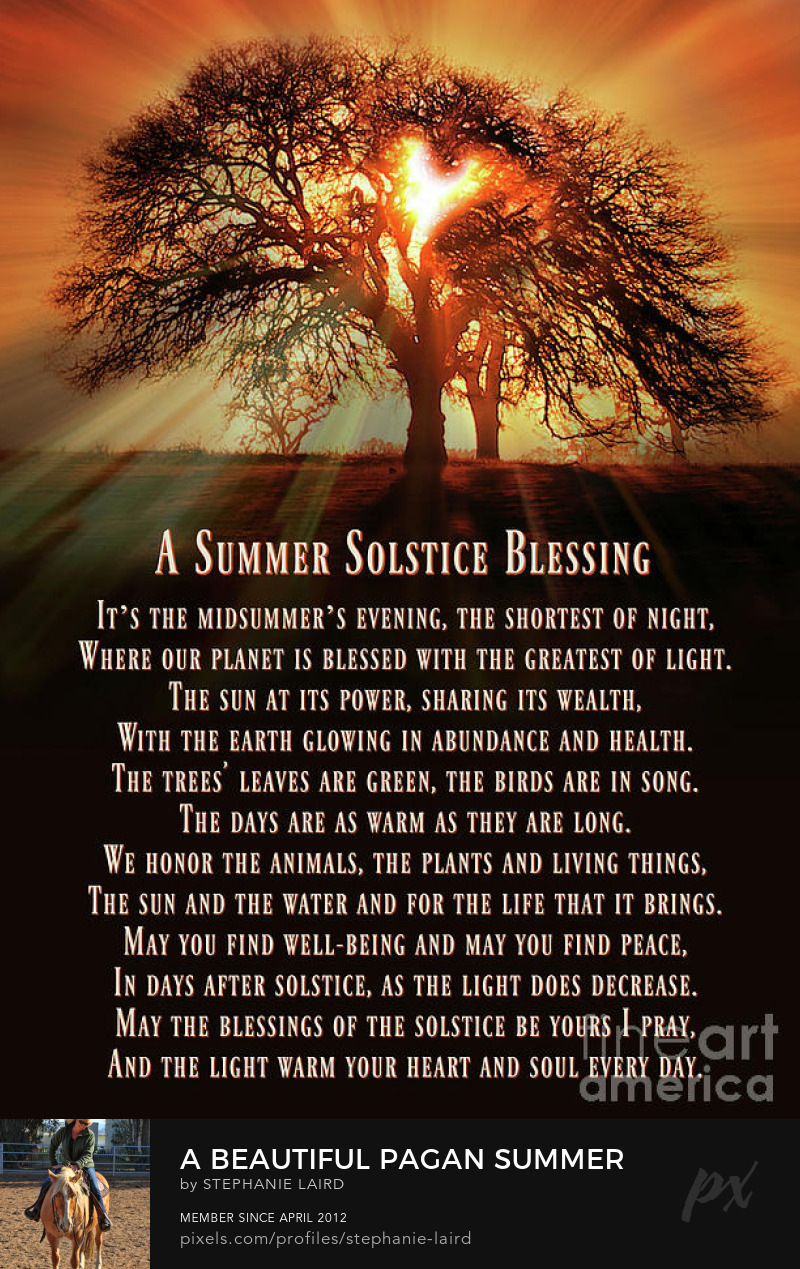
Here in this season of summer solstice and highlighted sunlight, I share this blessing and beautiful art from Stephanie Laird. May well-being and peace be yours.

Buy Art Online

Art from https://pixels.com/featured/a-beautiful-pagan-summer-solstice-original-blessings-poem-with-oak-tree-and-sun-stephanie-laird.html and shared with the embed code from this website.

Saturday, June 18, 2022

Father's Day 2022

This Father's Day, may the world slow down for you so you can share it with those who mean everything to you...be they your fathers, your children, your grandfathers, your uncles, your coaches, your neighbors,  your mentors, your mothers who are filling the roles of fathers in your world, and more. 

Image from https://christineelder.com/earth-day/

Wednesday, June 15, 2022

Summer Break 2022 Is On!

Today marks my last day of school meetings and events...ergo, my first official day of summer. This date has been out there, shining like a lighthouse lamp, a beacon of freedom and the succulence of summer as the days grow closer. 

I love teaching, and I love my job, but the last few years have been hard. Pandemic, remote, hybrid, masks, vaccines and boosters yet climbing numbers. It's been a hard wear and tear on my body (knee replacement surgery a month from now) and on my collective soul and mind. 

If you know any teachers, you know they are tired. The demands these last few years have been harder than ever, and the exhaustion is real. It has been by far more than "just regular school," and it certainly doesn't help when there are not enough bus drivers for public schools and substitutes for every school. A lot of teachers are doing double duty on top of dealing with their own and their student's emotional and mental health, parental stress, and the demands of teaching a wider than ever range of abilities in the classroom. 

For me personally with my deteriorating knees, I've seen how physically demanding elementary school is (and the running around the building I do as a Technology Specialist)... and how you don't realize how important health is until you don't have it!

For my fellow teachers out there--I see you and I know how hard we all have been working. I tip my hat to all that you have encountered and accomplished this year. I know the sweet victory of the making it to summer. Please take time to enjoy, to recuperate, to rest, to remind yourself what fun there is as you step away from lesson planning and paper grading these next several sensational weeks of summer. We have certainly earned it!


Images from Images from https://katelynslearningstudio.com/2017/06/treat-yo-self-teacher-summer-bucket-list.html and https://medium.com/@spencerideas/making-rest-a-priority-in-the-summer-52e5dc99746c (the latter which was written in 2018--showing you how tiring teaching is in "normal" years. It's been 10x harder since March 2020!)

Saturday, June 11, 2022

Fighting Flygskam

It's no surprise to anyone what an impact air travel has on the collective, planetary carbon footprint. It's come to have a name: flygskam. This Swedish word, which popped up in 2017 but gained popularity  shortly before the pandemic began means "flying shame." It is defined as climate guilt from flying, and is a term that came into being during Greta Thunberg's activism and refusal to fly due to the fact that flights can be extremely hard on our environment and contribute to high rates of greenhouse gasses. Additionally, many Europeans especially can take high speed trains at a much lower impact. Their choices reduced the amount of air travel right before the pandemic, double hitting the aviation industry.

Clearly it's a problem that needs to be solved as our world becomes more global and there is a greater need for people to be in other parts of the world. How can we do it responsibly? It is going to take innovation to help solve the problems of climate change and other environmental issues.

Board Now is just one of the many innovative plans trying to work on this solution. Board Now is a program that has partnered many organizations to build a coalition to reduce emissions through sustainable aviation fuel.  This Fues would be "made from sustainable feedstocks such as waste oils from biological origin, agri resides or non-fossil CO2." By having companies buy into the program, more refineries that produce sustainable aviation fuel can be built, which over time will lower the cost of this type of fuel. When companies affiliate with Board Now, they make a commitment to the planet to reduce overall emissions and their own carbon footprint while also helping to make this a more sustainable alternative overall in the field of aviation. 


To learn more about Board Now, check out their website. Also, be sure to check out some of the members and partners that are affiliated and on board with Board Now.

Wednesday, June 8, 2022

Bill Nye The Science Guy

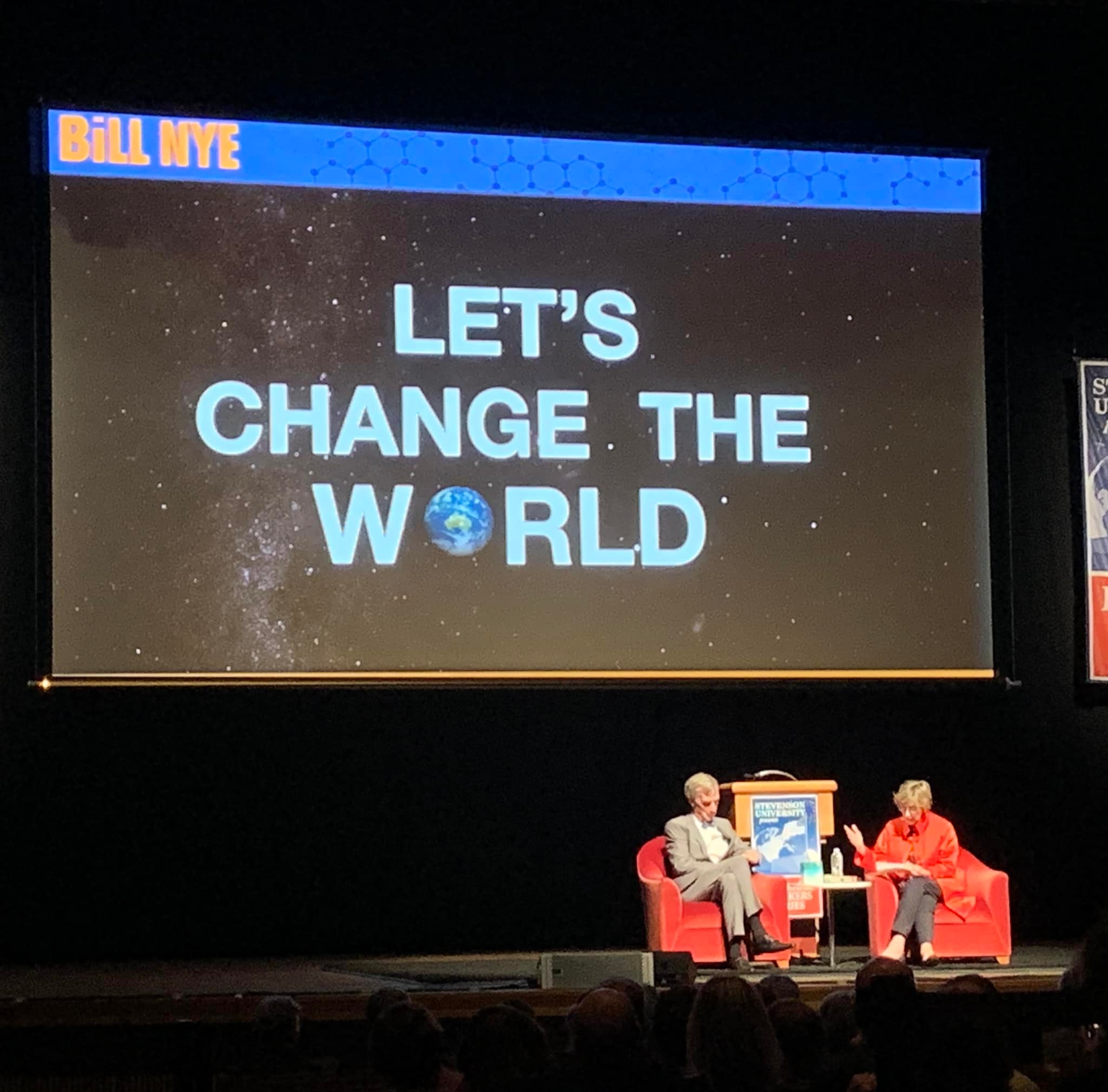
A bit ago (perfectly timed about a week before Earth Day) the Baltimore Speaker Series had their final speaker of the season: Bill Nye. To me, he'll always be known as "Bill Nye, The Science Guy" (because I'm in that age group that knew him as such.) It was a sweet li'l moment of nirvana to be in the Meyerhoff Symphony Hall, basking in the presence of his wit, humor, and intelligence, talking about science and our planet during Earth Day season!

Being foremost a scientist as well as an engineer, an author, speaker, inventor, he knows a lot about a lot. Clearly he believes in science and wants us all to know that it's important. The whole evening, and now as I reflect back, I'm struck by this quote that hangs in my office which is from Neil Degrasse Tyson [who is a good friend of Bill Nye's, by the way]:

I love Bill Nye's approach to everything. He makes you think. He makes you laugh. He makes you think some more. It seems a lot more of us in the world need to adopt that approach! A big part of his conversation was that the denial of climate change is NOT going to change anything. The science is real. 2010 to 2020 was the hottest decade on record. There is science in ice core samples, tree rings, fossils, shrinking glaciers in Greenland, and more that backs up the fact that rising historic temperatures all point to human impact. 

Bill Nye made reference to the Earthrise picture of the planet (taken by Bill Anders from space December 24, 1968). This reminded me of my recent Amanda Gorman post. Their messages of both were the same. We have a shared reality here on planet Earth. No political boundaries. One place. One people.

He also made reference to the 2022 Oscars Night/Will Smith slap that was heard around the world. Of course by now, that news has died down a bit, but media in the instant aftermath was highly abuzz about it. Bill Nye said if we all were talking about climate change in the same way and to the same extent that everyone was talking about Hollywood news, we'd be "getting it done." His messages: 
  1. We indeed need to be talking about climate change and science as much as possible. 
  2. Secondarily, we need to be voting (with the environment in mind when we do) or basically shut up and get out of the way.
His third message, which I found a mirror to what I always say, is that it's going to take big ideas and innovation to solve the climate crisis, which he deemed one of the greatest problems we are facing. Because we all share this world--we all share the air--everything we do affects everyone else. We can't say "fire" in a movie theater without consequences. We all need to work together to figure "it" all out. No one is coming to save us --it's up to us to figure this out.

Bill Nye also commented about Article 1, Section 8 of the U.S Constitution and how one of Congress' roles is to "promote the Progress of Science and useful Arts, by securing for limited Times to Authors and Inventors the exclusive Right to their respective Writings and Discoveries." Useful arts is engineering and innovation. He stressed that it is in the Constitution to go forward with our big ideas and be problems solvers using innovation! It is our job to "create the future we want." Not surprisingly, this is the motto and mission of The Solutions Project, where Bill Nye is one of the 40 funders. Their goals? 

  • To celebrate those leaders in the forefront of climate awareness and justice. 
  • To push for 100% clean energy by 2050. Not only would this significantly help our planet, but it could generate 3 million jobs in renewables.
  • To offer grants and support to those out there making a difference through climate innovation.

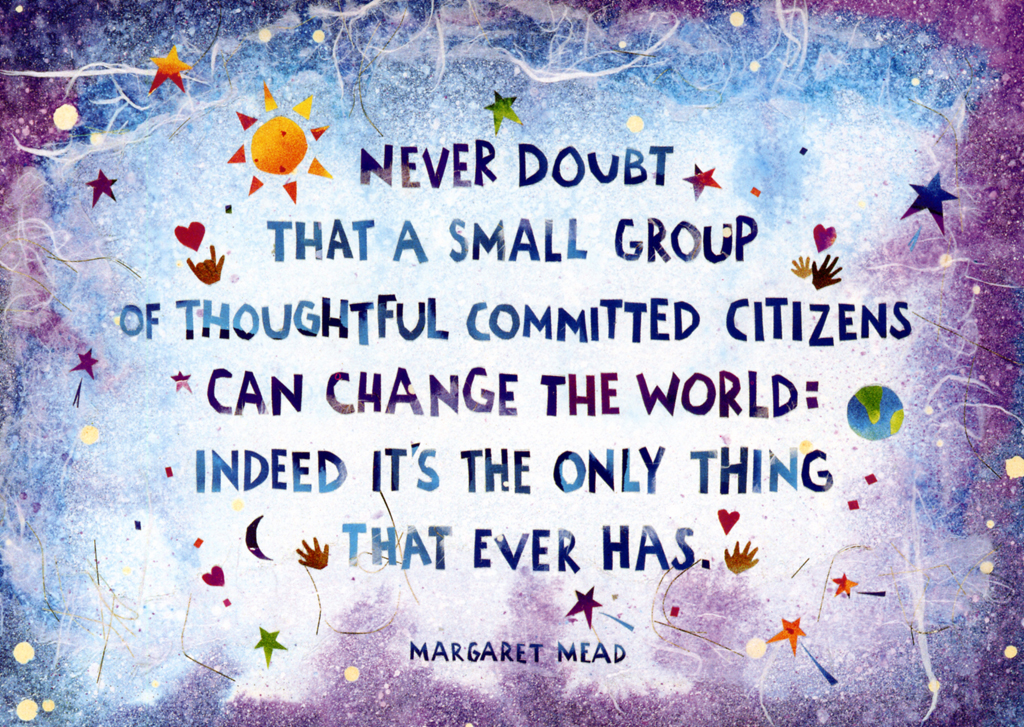
Bill Nye left that evening with an inspirational call for action--to go forth and change the world. It's going to take us, people! Let's do this! 


Neil Degrasse Tyson quote created at Canva.com; Final picture from my camera. Earthrise pic from https://www.theguardian.com/artanddesign/2018/dec/22/behold-blue-plant-photograph-earthrise, Bill Nye photo quote from https://www.ebaumsworld.com/pictures/great-bill-nye-quotes/84820033/

Saturday, June 4, 2022

Nathan Sawaya: LEGO Artist for the Earth

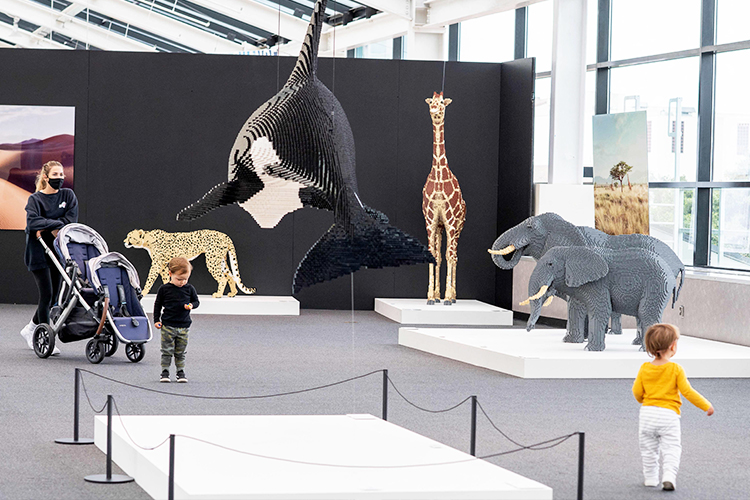
Nathan Sawaya's story fascinates me. Not many people go from lawyer to LEGO artist with a traveling art exhibit of his own, but Nathan did in 2007. I was in awe years ago when I saw his Art of the Brick exhibit (then in Philadelphia). It's amazing to see what he can do with buckets full of LEGOs. Sharing his story becomes a favorite for both my kindergarten students and me as I share this video and inspire them all to use the design process to become creators and LEGO innovators.


For the last year, Nathan has a new element to his Art of the Brick exhibit. Working with Australian-born photographer Dean West, they created the PERNiCiEM Collection. PERNiCiEM is Latin for extinction. This part of the Art of the Brick exhibit highlights endangered species with a mix of Nathan's LEGOs and Dean's photography. They feature fascinating facts about 18 animals in 19 exhibits. Included are where on the ICUN Red List of Threatened Species these animals are and why their numbers have diminished. (Spoiler alert--human threat to habitation or humans themselves are often the cause.)
 
The message in their collective art is that it is imperative to work to save our planet from climate change, deforestation, declining sea ice, polluted waters, and loss of species and biodiversity--for if we don't and these animals become extinct, only the plastic, LEGO-fied versions of these animals will be left. Reality will cease to be that, instead going more toward an artificial reality where we can only see these animals in their natural habitats through art, photography, or a digitized version of our world. 
 
 
The showcased animals in PERNiCiEM were created by Nathan, then they were taken to their natural oceanic, forest, grassland or arctic habitats and photographed by Dean.  The included animals:
  • African Elephant
  • Arctic fox
  • Beluga whale
  • Chilean flamingo 
  • Cheetah
  • Giraffe
  • Hawksbill turtle
  • Humpback whale
  • Malayan tiger
  • Military macaw
  • Northern white rhinoceros 
  • Orca
  • Polar bear
  • Reef shark
  • Sumatran orangutan
  • Vaquita
  • Western lowland gorilla
  • Whale shark
This is not the first time that Dean West & Nathan Sawaya have worked together. They are also featured in the "In Pieces" exhibits marrying Dean's photography with Nathan's LEGO creations in a series of several works of art.
 

Wednesday, June 1, 2022

Chef José Andrés & World Central Kitchen For The Win... Again!

Middle of last year ago (in the middle of the pandemic and hybrid teaching), I landed on an amazing book entitled Immigrant Innovators: 30 Entrepreneurs Who Made a Difference by Samantha Chagollan. The book, written for 8-12 year olds, was one of those books I read in one sitting... then I went to one of my 4th grade colleagues with zeal and excitement as it was a perfect book to use with their 4th grade Immigration unit. Being a fellow bibliophile and information junkie, she too was tickled pink alongside me. 

Finding 4th grade-level resources for students to do specific biography research can be difficult. The book would perfectly suit our needs with it's kid-friendly, 4-page spread of 30 biographies of famous, current, modern-day immigrants. Plus, it tied to my tech-nature and love of innovation... and with a biography visual report activity we have done (some years on the iPad and some years in Google slides).

One of the 30 individuals mentioned in the book was Spanish-born Chef José Andrés, founder of World Central Kitchen (and a multitude of other restaurants spanning at least ten cities). Shortly after assigning the biography study with the entrepreneurs from the book, I saw an article where José Andrés was giving out gift certificates to restaurant patrons in DC if they showed proof of vaccination. He was doing this to encourage more people to get vaccinated from the Covid-19 virus. That connection to our study had me excited, as we could bring this real world connection to our students.

José Andrés was in the news again earlier this year when he went to Poland with World Central Kitchen to help feed Ukrainian refugees after Putin and Russia's invasion into Ukraine. It was once again timed perfectly with our 4th graders' Immigration study. Additionally, for the past 3 years we have used the UNHCR [United Nations Refugee Agency's] website to teach the about the differences between refugees, migrants, internally displaced people, asylum seekers, returnees and more. The connections students were making to the news were incredibly strong. Additionally, it showed the value and importance of taking action to solve a global problem.

So it goes without saying, that once again, in difficult times, we look to the helpers. In the aftermath of the horrific Uvalde, Texas shootings,  Chef José Andrés is once again a helper. World Central Kitchen set up shop in Uvalde to feed the hurting community. Just as they have done time and time again with hurricane relief, wildfires, earthquakes, tornadoes, families impacted by the climate crisis, and more.

Looking at the dedication of José Andrés and World Central Kitchen, you see the power of his humanitarian efforts

"World Central Kitchen started with a simple idea at home with my wife Patricia: when people are hungry, send in cooks. Not tomorrow, today.... You see, food relief is not just a meal that keeps hunger away. It’s a plate of hope. It tells you in your darkest hour that someone, somewhere, cares about you...This is the real meaning of comfort food. It’s why we make the effort to cook in a crisis.... After a disaster, food is the fastest way to rebuild our sense of community. We can put people back to work preparing it, and we can put lives back together by fighting hunger. Cooking and eating together is what makes us human." ~ Chef José Andrés

It makes me think of the UN Sustainable Goals. José Andrés has worked hard to knock at least 7 of the 17 goals out of the ball park. These are the things that give us all hope.


To learn more about José Andrés, check out these links:


Images from: https://www.amazon.com/Immigrant-Innovators-Entrepreneurs-Made-Difference/dp/1950500276, UN Goals from https://www.materialise.com/sites/default/files/image-uploads/pages/Blog/corporate/un-global-goals-for-sustainable-development.png and modified by highlighting 7 of the boxes and adding a note, and http://edibledc.com/stories/bon-appetits-variety-show-will-raise-money-for-world-central-kitchen; quote graphic created at Canva.com, Video from https://youtu.be/-eYaSwwmGl4