Showing posts with label coding. Show all posts

Saturday, October 25, 2025

Spooky Season is Here! Make It Interactive

Ahh, the Spooky Season approach-eth! Time for ghosts, goblins, and ghouls to appear during this pumpkin carving, costume donning, trick-or-treating time of the year. 

In taking advantage of the season and the needs of my 4th grade teachers and their classes, I concocted these two seasonal interactives using Canva Code. Starting with simple prompts (and about 2 dozen revisions, modifications, and versions later), I made these two 4th grade-friendly Halloween activities centered around nouns, verbs, and adjectives! Fun fun for everyone!

Here's how my first interactive started in Canva Code:

Create an interactive game for 4th graders to help them learn and identify nouns, verbs, and adjectives. Include front matter to instruct the difference between the parts of speech. Do not use helping verbs, but do include verbs in present and past form. Include common versus proper nouns. Identify the difference between the two of these in the instructional front matter.  Have the sentences focused around kid-friendly fun Halloween sentences when the student must identify the part of the speech within the sentence. Create 20 sentences to provide opportunity for them to learn. Put each sentence on its own slide so that the game presents in a slide deck. Provide feedback if students make a mistake so that it is both self grading and a learning tool. Add graphics that fit the sentence.

From there, my directives helped tweak the activity and double the questions. Then, it inspired a secondary activity along the lines of magnetic poetry. Feel free to play or share with your students!

Halloween Parts of Speech Interactive Game for 4th Graders by Dabrowka, Ms. Vicki

Halloween Magnetic Poetry Game: Nouns, Verbs & Adjectives for 4th Grade by Dabrowka, Ms. Vicki

Image created at Canva.com; Interactives created using Canva Coding & found here: https://www.canva.com/design/DAG1rf-ggmM/4aUtUZrydJDlTfcFZdbn0g/edit?utm_content=DAG1rf-ggmM&utm_campaign=designshare&utm_medium=link2&utm_source=sharebutton and https://www.canva.com/design/DAG1rqGMrrM/GGcja46E7fit5uYufcaEfA/edit?utm_content=DAG1rqGMrrM&utm_campaign=designshare&utm_medium=link2&utm_source=sharebutton

Saturday, September 27, 2025

The Symbiosis of Agrivoltaics

Today's post is brought to you by Environmental Math. Why? Because there's a high usage of "+" and "=" ahead to land on environmental science.

Here's the breakdown:

  • Agrivoltaics = “agriculture” + “photovoltaics” = where the same land is used for both agricultural reasons and solar energy
  • Photovoltaics = solar powered technology
  • Symbiosis = an interactive relationship between 2 species (typically, but not always beneficial to both)  
    • Examples:
      • Bees and flowers = pollination + nectar
      • Clownfish and sea anemones = protection + cleaning
      • Oxpeckers birds and large mammals (ex: rhinos & zebras) = tick and parasite eating + tick and parasite removal 
      • Acacia trees and ants = tree thorns protect the tree + provide shelter/feed the ants

  • Mutualism = A form of symbiosis where 2 species benefit off each other

Given all of the above, here's this math:

Agrivoltaics = symbiosis = win + win

This image is a great example of the win, win of the symbiotic relationship between humans, land, and livestock:

Check out how the land is being used in a multitude of ways: grazing grass, growing crops, housing solar panels for generating energy which, in turn, have the panels creating shade for the animals. 

Additionally...

  • The shade can also reduce water loss from the land. This, in turn, helps grow and support plants (the food source for animals) while simultaneously creating less need for irrigation.
  • Overall soil moisture helps increase biodiversity on the land. 
  • As the sheep, goats, cows, etc graze the land, the grass is kept trimmed, reducing the need to mow.
It showcases a sharing of the land versus a competition on how to use the land. It provides a man-made version of symbiosis and mutualism. It's teamwork at its finest. Win, win, win!

Playing around with my new best friend, Canva Code, I created this upper elementary/middle school level interactive which can further help the concepts of agrivoltaics sink in. To go directly to the site to see it screen-sized or to link to it in your own classroom, click here.

Teaching Agrivoltaics and Natural Symbiosis by Vicki Dabrowka, created using Canva Code.

Eager to learn more about agrivoltaics? Here are some excellent resources:


Saturday, September 6, 2025

Animal Habitats Matching Game

Canva is my go-to place for making all things beautiful: presentations, class signs, image creation, graphic organizers, and more. I've written about it time and again.

With the influx of AI and the integration of AI tools in so many educational platforms over the last two years, Canva has done a great job of keeping pace. They've added to their "magic tools" in many ways, and it has been fun exploring them--especially the Canva Code--to see what potential they have. It's been a good way to learn along the way how to make tools that could be useful in the classroom. (See these posts for other interactives I've created this summer using Canva Coding: Independence Day & The Declaration of Interdependence and Plastic Eating Microbes to the Rescue one.)

This Animal Habitats Matching game is my latest adventure. Geared to the 4th or 5th grade level, this game was created using their "Canva Coding" tool. It started with the prompt: "Design an interactive matching game for 4th or 5th graders about animal habitats, with images of animals and their natural environments. Provide immediate feedback for correct and incorrect answers." Of course, it took a lot of tweaking, at least 6 versions, and hundreds of line of code for this game to pop out. I'm pleased with the outcome! The beauty of this drag-and-drop game is that it does all of the following:
  • teaches animal habitats in a hands-on, interactive fashion;
  • provides instant feedback for both correct and incorrect answers--while also keeping score of correct matches and attempts;
  • provides hints when needed and positive reinforcement for learning;
  • saves teachers time in creation of materials.
Make sure to take time to play. To see a larger version for an easier play, click here.
Animal Habitats Matching Game Design by Vicki Dabrowka, using Canva.com's Canva Code element.

Saturday, August 23, 2025

YouTube: A Teacher's Best Friend

As an educator, I'm always looking for go-to resources. I happened on this graphic about the bounty of teaching channels on YouTube at Educators Technology the other day. (Educators Technology is a resource in and of itself. I wrote about it in early June. I learn something from their Facebook page almost every day!) 

I love how this infographic divides the channels by subject area. Likewise, I love how many of my tried and true favorites are listed, which makes this a super one-stop-shopping teacher resource! Just in time for back-to-school! 


Click to enlarge or print.

Graphic from https://www.facebook.com/Edtechandmobilelearning/posts/pfbid0HFK1ybboprxHkdppMnVqoGn6X2wunxJ4qjqfAHfUxfECJHeGJpf21UrGn5K9WpD9l

Saturday, December 2, 2023

Hour of Code 2023: December 4-10

In January of 2013, Hadi & Ali Partovi (two Iranian-American brothers) started Code.org with the intention of making computer programming more accessible to people of all ages. They launched the first Hour of Code in sync with Computer Science Education Week that December 2013--5 years after Computer Science Education's first week, which was December 6-12, 2009.

Computer Science Education Week takes place during the full week that encompasses Rear Admiral Grace Murray Hopper's birthday. Grace Hopper was born December 9, 1906. She was a woman ahead of her time: a Vassar graduate, a naval officer, a mathematician with her PhD from Yale in that and mathematical physics, a World War II veteran, a computer programmer, a software developer, and one of the developers of the programming language COBOL. She's credited with literally "debugging" the first computer infiltrated by a moth, coining a term we still use today. She was the first individual woman to receive our country's highest technology award: the National Medal of Technology in 1991 and was posthumously awarded the Presidential Medal of Freedom in 2016 by President Obama.


Code.org's Hour of Code is December 4th through 10th this year--making this the 11th year of highlighting that anyone can learn to code. Now a global movement across 180 countries, Hour of Code inspires people of all ages to take on some coding activities for at least an hour. In my K-5th grade tech classes, we'll all be coding this week!


Looking for some ways to host your own Hour of Code, check out these activities:

Wednesday, August 16, 2023

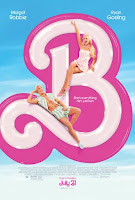
Barbie Movie & Girls In STEM

If you follow any Hollywood news or social media, you may have heard of a little movie called Barbie, which (at this writing) has made over $1.03 billion in the three weeks since it's July 21st released. For anyone who is unsure--that's a solid win and record breaking indeed.

I have not seen the Barbie movie yet (though we finally made it to Oppenheimer--fantastic!) As for the Barbie movie, I definitely have plans to see it at least once with a friend (who loved it), and hopefully too with my family. My 20-something daughter, who's been pretty anti-pink her entire life, even liked it, so that's strong reviews indeed.

As a product of the '8os, I played Barbies a lot. I had a wooden built Barbie house that friends of the family made (which was way cooler than the more plastic, more expensive variety), and I also had the camper and the corvette. [Also, as a product of the '80s, I also have yet to see Indiana Jones...which is a travesty given the first part of the sentence, but that is indeed another story.]

Given being a Barbie fan growing up, and a female and an elementary tech teacher, I was really drawn to Shannon Buckle's recent blog post on her DT with Mrs. B entitled "Girls Can Code - Barbie Says So!" She too is a an edtech teacher, though she is in New Zealand. She highlighted a lot of her adoration with the movie, and also the importance of needing more women in both coding and technology. I like her lens of looking at the movie with this vantage point, and am eager to do so myself when watching.

It also got me wondering about the tech statistics. I landed at Exploding Topics & Jessica Hubbert's April 25, 2023 post entitled "70+ Women In Tech Statistics (2023)." A very good read, but these highlights stood out:

With 47.7% women in the global work force (which is higher in the US at 57.4%--though even that number is lower than the US high of 60% in 1999), only 26.7% of women are in tech-related fields/jobs. Yes, women are under-represented. And no surprise, women in software engineering still report unequal pay. (Although, I was surprised by how close it was at 93 cents for every dollar men make.) 

So how do you get -- and then keep --girls and women in STEM fields? Here are two good reads with a lot of great answers:

In the meantime, looks like I've got two jobs:

1. Go see the Barbie movie.

2. Serve as a positive role model for the gals in my tech classes, encourage their interest, and provide them with a lot of opportunities to innovate and love it!


Images from https://noguiltlife.com/quotes-from-barbie-movie-2023/ and https://www.facebook.com/Finerton/photos/a.2080793535473288/2864858487066785/?type=3


Saturday, February 5, 2022

It's Olympics Season

Olympic frenzy has hit the world! It is Olympics Season!

This year's Winter Olympics are in Beijing and underway, running from February 4th to the 20th.

Here are some ways to bring the Olympics into your classroom to capitalize on the excitement!

Image screenshot from Miss Hecht's Olympics Bitmoji Board https://linktr.ee/MissHecht?fbclid=IwAR2XjFRMe9tVrC97W3oZ4PQJJAp3xEjaDd45axQFddlArUvDj2AFfU31Dec; Video from https://youtu.be/FPdKq-MXQlk

Wednesday, January 19, 2022

TED's Think Like A Coder Series

I've been working on some coding activities with my younger elementary students at school. For my very youngest students, we use Bee-bots as a way to introduce the concept of programming. Then Code.org and their CS Fundamentals courses are the perfect introduction to block coding for young students. From there I always like to bounce into Scratch Jr on the iPad.

The students love it and always beg for more.

Coding and computational thinking are definitely key literacy skills for today's students.

That's why, TED-Ed's "Think Like a Coder" Series is brilliant! Partnering with YouTube Learning Playlist, TED-Ed has created these ten short animated adventures teach the principles of coding through videos challenging you to think them through. To learn more about the series, go here. With names like Prison Break, The Resistance, and more, they will capture the interest of students of all ages!

Here's the trailer:

Episode 1: Prison Break

Episode 2: The Resistance

Episode 3: The Furnace Bots

Episode 4: The Train Heist

Episode 5: The Artists

Episode 6: The Chasm

Episode 7: The Tower of Epiphany

Episode 8: The Gauntlet

Episode 9: The Factory

Episode 10: The Finale: The World Machine

Video from :https://youtu.be/qhAAmyGnA-M, Image from https://blog.endlessnetwork.com/blog-1/how-one-ted-ed-producer-thinks-like-an-artist-to-inspire-others-to-think-like-a-coder


Saturday, December 14, 2019

Checking in About Computer Education Week

Here at the tail end of Code Week (or Computer Education Week) 2019, which is officially Dec 9-15 this year, this video falls in the cateogory of "Must-See TV." Even though it is from 2013, it still feels very current and is a good use of your ten minute viewing!

Take time to pursue some coding... whether it's Computer Education Week or not!


Video from https://youtu.be/dU1xS07N-FA and image from http://dese.ade.arkansas.gov/divisions/special-projects/arkansas-computer-science-initiative/computer-science-communications/computer-science-education-week-announcements

Wednesday, December 5, 2018

Coding, Coding, & More Coding This Hour of Code Week

This fall I attended two coding workshops, both run by our Independent School Association.  One
was on Coding & Literacy and the other was entitled "Infusing Making and Coding in the Elementary Classroom."

Both of them did what a good workshop should do: they got my mental gears spinning and inspired me to take some of the new ideas and put them into practice into my classroom. It also inspired me to do a little shopping, and I purchased the 2 follow up books to Hello Ruby (and write my November 10th post!)

Here are 2 of my coding inspirations. Perhaps they'll serve to inspire you this Hour of Code & Computer Science Education Week (December 3-9th, 2018):

1. For my 3rd Graders and their Colonial Times Unit, I had them use ScratchJr to create a 4 slide animation showing a variety of movement for the early colonists.  Here are a few sample screenshots that I used to show the class. (I purposely didn't add any coding for my last slide so as not to give everything away for my students!)


2.  For my 1st Graders, I used Seesaw Learning Journal's Activity feature to create a 2 part Thanksgiving coding activity. First, they illustrated the following poem via Seesaw with emojis and drawings, then they accessed the map activity to label the code. I have become a huge fan of Seesaw's Activity Library this year, both in searching new ideas, and creating my own to share out with the Seesaw community. If you use Seesaw, definitely be sure to check out the Activity Library--there's a wealth of activities there on any subject you'd want!


Wrapping up... a visit with Linda Liukas, creator of Hello Ruby, is a great place to land during Hour of Code & Computer Science Education Week. Here is her TEDtalk on coding as a language may her energy and enthusiasm inspire you this week!


Scratch Jr & Seesaw screenshots from my iPad, Linda Liukas video from https://www.ted.com/talks/linda_liukas_a_delightful_way_to_teach_kids_about_computers, Computer Science Education Week image from https://twitter.com/CSEdWeek

Wednesday, November 28, 2018

Creativity Is...#HourofCode: December 3-9

Creativity Is...

Now that's a good question. What is creativity to you?

Take a minute to jot down five or more answers that crop up. Then watch this, from Hour of Code.


Hour of Code first began in 2013, during Computer Science Education Week. That first week in 2013 was December 9 to December 15. An inspiration from Code.org, Hour of Code started as a challenge to teachers, schools, students, and parents alike to take the "Hour of Code Challenge," trying out coding for just an hour. With their programs and tutorials, they showed that anyone could do it!

Try your hand during this year's 2018 Hour of Code week--December 3rd through 9th. Here are a number of options and places to start on their Hour of Code website... where you will find over 200 one-hour tutorials & interactive in one of over 45 languages.  Be a part of this global movement!


video from https://youtu.be/VYqHGIR7a_k; image from https://www.facebook.com/Code.org/videos/what-is-creativity-with-bill-gates-malala-rosario-dawson-susan-wojcicki/279676706209196/

Saturday, November 10, 2018

Hello Ruby

A good picture book takes you places.

With Hello Ruby, that "place" is within the computer, coding and exploring:
"Meet Ruby―a small girl with a huge imagination, and the determination to solve any puzzle. As Ruby stomps around her world making new friends, including the Wise Snow Leopard, the Friendly Foxes, and the Messy Robots, kids will be introduced to the fundamentals of computational thinking, like how to break big problems into small ones, create step-by-step plans, look for patterns and think outside the box through storytelling. Then, these basic concepts at the core of coding and programming will be reinforced through fun playful exercises and activities that encourage exploration and creativity. In Ruby's world anything is possible if you put your mind to it."
Ruby is a whimsical character that invites readers into coding and computational thinking. She is the main character in the 3 book series "Hello Ruby."
Linda Liukas, Finish author and creator of the Hello Ruby series, programmer, founder of Rails Girls, and CodeAcademy alumni,

Hello Ruby links to inspire educators:

Linda Luikas' website

Linda Luikas TEDResidency Talk: Crawling into Coding

Linda Luikas' TED Talk: The Poetry of Programming


Video from https://vimeo.com/292078023, images from Amazon.com!