Showing posts with label 8 billion. Show all posts

Wednesday, June 5, 2024

World Environment Day: June 5th

Annually, June 5th is World Environment Day. Led by the United Nations Environment Program (UNEP), this date is meant to unite people across the globe to heighten awareness for environmental action.

Eons ago, I submitted a blog post about World Environment Day to try to win a trip to Rwanda that UNEP was hosting in honor of World Environment Day. I didn't win. But it also shows how long this day has been a calendar date of awarenessfor GTG & me..

This year's theme is coined #GenerationRestoration, with the focus on land restoration, ending desertification, and working toward drought resilience.  According to UNEP, an estimated 3.2 billion people are hit hard by desertification. Additionally, droughts are anticipated to impact 3/4 of the world population by 2050. Yikes!

Some featured resources on their website include:

Musical playlists for #GenerationRestoration

A guidebook of solutions of things we can do to make a more resilient planet.

"Weird & Wonderful Fun Facts about Terrestrial Ecosystems" and their Key Messages about this year's theme.

Test yourself by taking the UNEP quiz "How Much Do You Know About Degraded Land, Deserts and Droughts?"

A list of UNEP World Environment Day events, including the mention of the 2020 documentary "Kiss the Ground," now currently a movie available on Netflix. Here's a trailer (narrated by Woody Harrelson):

Additionally, for my teacher friends out there, here are some more classroom resources:


video from https://youtu.be/Cfl9QVOnRgQ?si=P6WuN-8G4Ynvxc-R and https://youtu.be/K3-V1j-zMZw?si=hSGOqDoB6ghjag4m, logo from https://socenv.org.uk/global-theme-announced-for-world-environment-day-2024/

Saturday, January 20, 2024

Population Education's: A Quick Trip to 8 Billion


Population Education is an amazing website that brings together a lot of globally important factors: numbers, demographics, and human impact on each other, economics, and our planet. In the many. years of Maryland Association of Environmental and Outdoor Education conferences I've attended, I always try to catch any workshops presented by Population Education. They have a wealth of lesson plans and teaching resources, and they are top notch in anything they do.

One of my favorites is their World Population "Dot" video, which I first wrote about in 2015 and I watch at least once a year with students. Another version of it is their World Population History data visualization accompanying website.

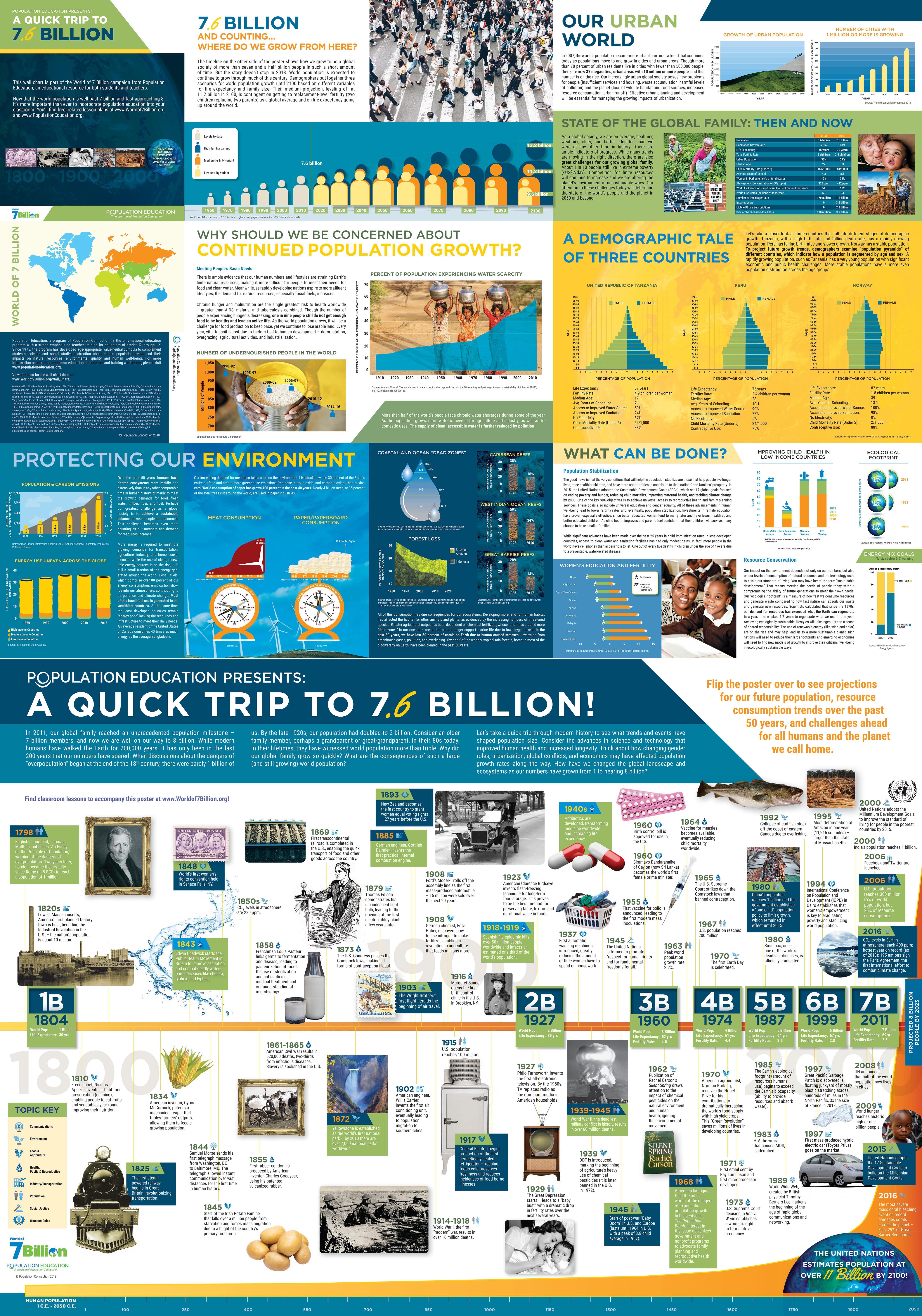
Now, as our numbers keep growing, they have a new poster out: "A Quick Trip to 8 Billion." This two-sided wall chart gives a timeline of historical events and inventions over the past 200 years to show how the population has impacted all of this. The flip side shows a multitude of infographics detailing the challenges that come from increased population growth. Along with the poster, 3 lesson plans are included: 1). a guided exploration of the timeline; 2). a scavenger hunt to see how numbers and resources have changed over time; 3). an activity where students create a planetary report card to measure the human and environmental health of the planet over the past 200 years.


I'm looking forward to ordering a couple for my school. (Posters are $5, but $4 if you buy in larger quantities. Click here for details.) Additionally, you can also get a high resolution version of the e-poster.

Other Resources on their site include:

Population Education is tied to the following education websites to check out for even more resources:

Images from https://www.worldof8billion.org/wp-content/uploads/2022/11/wall-chart-high-resolution.jpg and logo from https://populationconnection.org/population-education/k-12-students/

Disclosure: I am not profiting at all if you purchase anything from their store--I just love their resources!

Wednesday, November 16, 2022

Reaching 8 Billion

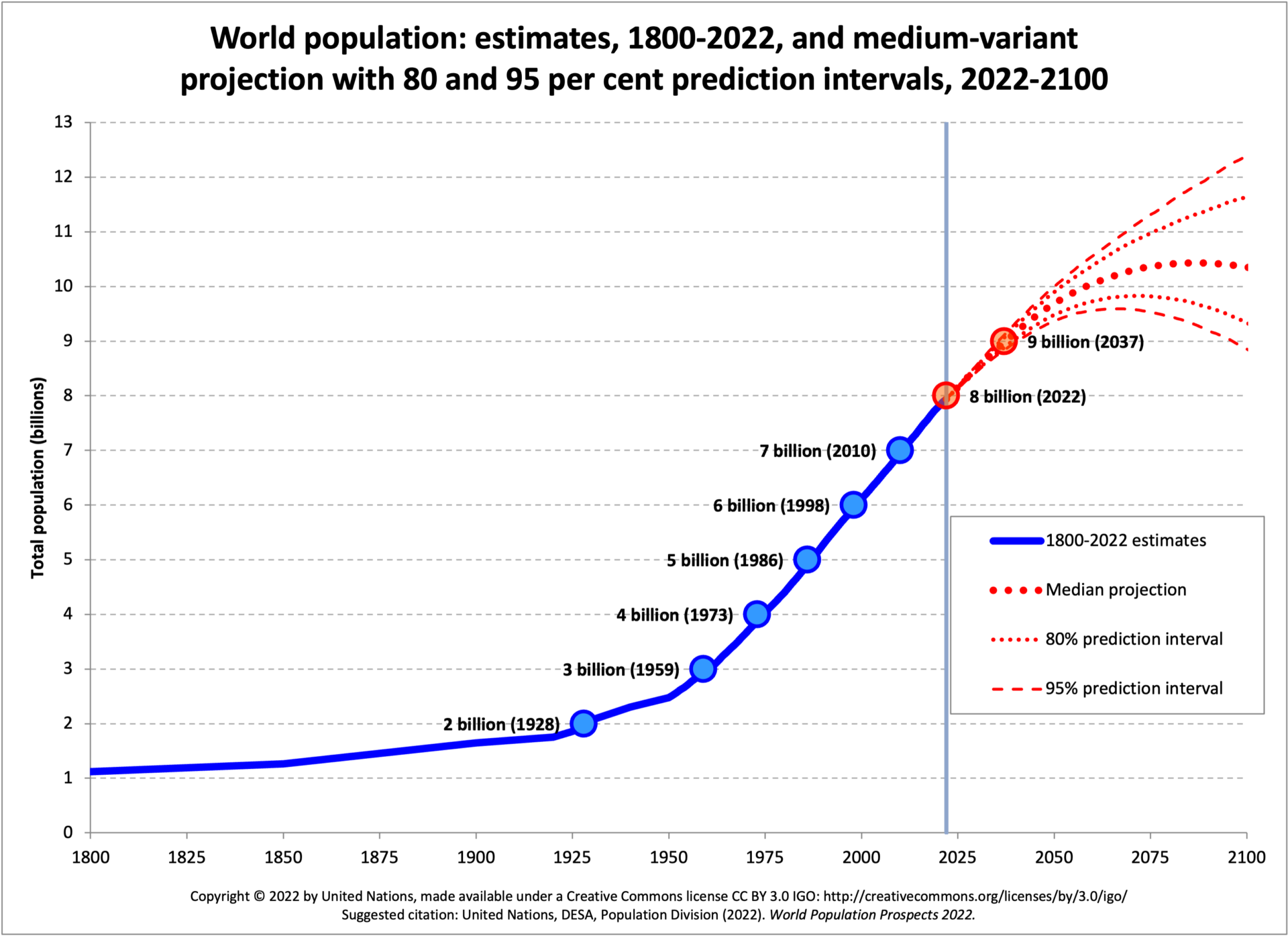
Yesterday (Tuesday, November 15th, 2022) was the Day of 8 Billion. It was the day we, as a planet, reached the global milestone of 8 billion (with a "B") people. This feat took only 12 years to go from 7 billion (in 2010) to 8 billion.

Ever since yesterday when I heard the news of it being 8 Billion Day, I've periodically checked in on WorldOMeter's website. It shows the current population numbers in live time, with numbers changing by the second. It's amazing to see the incredible jump from this time today versus the same time yesterday!

Watching the trajectory historically as we gain each additional billion is fascinating. The graph below--as well as the data in the chart I made--were from Population Education's website and their post by Marian Starkey [July 6, 2022] entitled "8 Billion and Growing: World Population Milestones Throughout History." Both data visualizations are eye-opening and jaw-dropping when you think of how that rate has increased over time. The startling point too is how flat the line on the graph was for population growth from year 0 to 1800 (which you can see on the graph shown here).


While it's looking like United Nation projections don't have us hitting 9 million until 2037 (15 years, a bit of a bigger jump than what we just saw between 7 and 8 billion), there clearly are ramifications across almost every field of study and interest. Of course, there are the environmental impacts of an ever-crowding planet. Technology and medicine have made it possible to have fuller, richer, healthier, and longer lives. Growing population means we need to have the resources available for us to live here on our planet as well as to provide us with food for all of these growing people. 

To learn more about the Day of 8 Billion and how 8 billion people impact our planet, check out these sites:

  • "How Big Is a Billion" benchmarks from Population Education so you can begin to wrap your head around just how big IS 8 billion??!
  • Click this GTG archived link from back in February of 2015 (way back when there were only 7.3 billion people) to see Population Education's 7 minute map-animated video of population over time from 0 to current day and projected to 2050
  • Also from February 2015 and my "Framing Education Around Population" post about Population Education, find the map of what countries would look like if their land mass matched their population.
  • Population Riddles you can use in class with to get your students math minds bending around these really big numbers.

Intro image from https://thelatch.com.au/current-world-population/Population graph from https://populationconnection.org/wp-content/uploads/2022/07/1800-2100.png; chart created from data on https://populationconnection.org/blog/world-population-milestones-throughout-history/, video from https://www.youtube.com/watch?v=6vL1_kCX6qg