Showing posts with label animals. Show all posts

Saturday, April 25, 2026

10 Dynamic Eco-Women

March is known as Women's History Month, but who says you only have to pay tribute to women one month of the year? I certainly do NOT subscribe to that! Especially during the month of Earth Day!

This article from BBC Wildlife showcases these 10 amazing women: "10 Women Who Changed the World: The Pioneering Female Conservationists, From Jane Goodall to Sylvia Earle, who redefined Our Bond with Nature by Amy May Holt (10-2-2025). I love the videos that are included on many of these phenomenal environmental leaders.

Image created using www.Perplexity.AI with this prompt: Make a photo montage/collage of these environmental leading women: Jane Goodall, Sylvia Earle, Dian Fossey, Saengduean Chailert, Lily Venizelos, Margaret Murie, Wangari Maathai, Marina Silva, Leela Hazzah, Florence Merriam Bailey.

Saturday, January 17, 2026

Squirrel Appreciation Day: Annually January 21st

One could argue that there is a "day" for everything. They just may be right. This week ahead (and annually), mark your calendar: Squirrel Appreciation Day: January 21st!

This annual environmental day was created in 2001 by Christy Hargrove, a wildlife rehabilitator from Asheville, North Carolina. 

The reason? She wanted to honor these little scampering scurriers who have a harder time in the winter landing on their next food source.

To appreciate our little furry neighborhood buddies, I used this National Wildlife Federation blog post for inspiration to write this "Squirrel" Acrostic! You can always click that link to learn more!

Scampering about our parks, cities, suburbs, and wooded areas,
Quietly going about your business in our backyards...
Under trees, then up in the branches you go on your quests,
In search of your next snack with those seeds and nuts that fall about.
Routinely one of our wildest mammals we see,
Raiding our bird feeders just a little too often.
Energy-crazed and zipping about, revving up our watching dogs,
Letting us all watch, these furry acrobatic squirrels bounding about.

And here's a little National Park Service social media I ran across about a year and a half ago that I tucked away, for this very day! Hope it makes you chuckle!

For the "Learn more" link above, click here to find out more at the National Park Service.


Social Media screenshot from National Park Service: https://www.facebook.com/nationalparkservice/posts/pfbid0aswwaxzHEzJW5u3iXcyqaYHSboKX5ZK7oDABJ19UBGSha9qLBVzA5GWb1CDZGSj5l; Photo from my back yard, Squirrel Appreciation Day image created at Canva.com

Saturday, September 27, 2025

The Symbiosis of Agrivoltaics

Today's post is brought to you by Environmental Math. Why? Because there's a high usage of "+" and "=" ahead to land on environmental science.

Here's the breakdown:

  • Agrivoltaics = “agriculture” + “photovoltaics” = where the same land is used for both agricultural reasons and solar energy
  • Photovoltaics = solar powered technology
  • Symbiosis = an interactive relationship between 2 species (typically, but not always beneficial to both)  
    • Examples:
      • Bees and flowers = pollination + nectar
      • Clownfish and sea anemones = protection + cleaning
      • Oxpeckers birds and large mammals (ex: rhinos & zebras) = tick and parasite eating + tick and parasite removal 
      • Acacia trees and ants = tree thorns protect the tree + provide shelter/feed the ants

  • Mutualism = A form of symbiosis where 2 species benefit off each other

Given all of the above, here's this math:

Agrivoltaics = symbiosis = win + win

This image is a great example of the win, win of the symbiotic relationship between humans, land, and livestock:

Check out how the land is being used in a multitude of ways: grazing grass, growing crops, housing solar panels for generating energy which, in turn, have the panels creating shade for the animals. 

Additionally...

  • The shade can also reduce water loss from the land. This, in turn, helps grow and support plants (the food source for animals) while simultaneously creating less need for irrigation.
  • Overall soil moisture helps increase biodiversity on the land. 
  • As the sheep, goats, cows, etc graze the land, the grass is kept trimmed, reducing the need to mow.
It showcases a sharing of the land versus a competition on how to use the land. It provides a man-made version of symbiosis and mutualism. It's teamwork at its finest. Win, win, win!

Playing around with my new best friend, Canva Code, I created this upper elementary/middle school level interactive which can further help the concepts of agrivoltaics sink in. To go directly to the site to see it screen-sized or to link to it in your own classroom, click here.

Teaching Agrivoltaics and Natural Symbiosis by Vicki Dabrowka, created using Canva Code.

Eager to learn more about agrivoltaics? Here are some excellent resources:


Saturday, September 6, 2025

Animal Habitats Matching Game

Canva is my go-to place for making all things beautiful: presentations, class signs, image creation, graphic organizers, and more. I've written about it time and again.

With the influx of AI and the integration of AI tools in so many educational platforms over the last two years, Canva has done a great job of keeping pace. They've added to their "magic tools" in many ways, and it has been fun exploring them--especially the Canva Code--to see what potential they have. It's been a good way to learn along the way how to make tools that could be useful in the classroom. (See these posts for other interactives I've created this summer using Canva Coding: Independence Day & The Declaration of Interdependence and Plastic Eating Microbes to the Rescue one.)

This Animal Habitats Matching game is my latest adventure. Geared to the 4th or 5th grade level, this game was created using their "Canva Coding" tool. It started with the prompt: "Design an interactive matching game for 4th or 5th graders about animal habitats, with images of animals and their natural environments. Provide immediate feedback for correct and incorrect answers." Of course, it took a lot of tweaking, at least 6 versions, and hundreds of line of code for this game to pop out. I'm pleased with the outcome! The beauty of this drag-and-drop game is that it does all of the following:
  • teaches animal habitats in a hands-on, interactive fashion;
  • provides instant feedback for both correct and incorrect answers--while also keeping score of correct matches and attempts;
  • provides hints when needed and positive reinforcement for learning;
  • saves teachers time in creation of materials.
Make sure to take time to play. To see a larger version for an easier play, click here.
Animal Habitats Matching Game Design by Vicki Dabrowka, using Canva.com's Canva Code element.

Sunday, February 9, 2025

Two Species to Love for Valentine's Weekend Ahead

Yes, Valentine's Day is around the corner... and there is certainly a lot to love about that! Hope you celebrate all weekend long!

But also this week ahead--both on February15th this year--we have two eco holidays celebrating some sizable species that need our love too. Celebrate these conservation commemoration days.

World Hippo Day is annually February 15th. Hippos are at a high level of vulnerability on the International Union for Conservation of Nature Red List of endangered species. As the 3rd largest land animal (after elephants and rhinos), they weigh in at over 7,000 pounds. Found mainly in Africa, these huge land mammals have had dwindling numbers because of habitat loss to urbanization and farming (as well as loss of access to the fresh water they need). Likewise, poaching puts hippos at great danger.

World Whale Day, held the 3rd Saturday of February (which this year is February 15th). Since 1980, the Pacific Wildlife Foundation & Greg Kauffman have led the way in honoring and protecting these marine giants. Not only important to ocean ecosystems, whales hold an important place in many cultures as revered creatures and symbols. Their threats come from getting trapped in fishing gear, being illegally hunted, and warming ocean waters from climate change. 

To honor both of these animals and share love with them along with your loved ones this weekend, you can ...

  • Learn more about both of these creatures.
  • Take time to find a documentary.
  • Make a donation to World Wildlife Foundation.
  • Raise awareness on your social media about these two creatures.
  • Find a way to see them in their natural habitat.
  • Support policies that promote their protection and biodiversity.

Images created using Canva.com's Magic tools.

Saturday, July 13, 2024

Environmental Elmo

Elmo, of Sesame Street fame, is one pretty well-known and easily recognizable muppet. A regular on Sesame Street since 1980, he's one of our favorite 3-and-a-half-year-old...at least in our house. 

Elmo was a favored beanie baby in our house with our daughter. One particular trip to the Florida Strawberry Festival (many moons ago) brings back an Elmo fear-factor moment when we realized Elmo was once lost, dropped from stroller snuggles. Luckily, with swift retracing of steps, he was miraculously found before our 2 year old even realized he was missing. 
Phew! Crisis averted!

Just like being found in the vast fairgrounds for us, Elmo is always full of surprises. Elmo's latest is an environmental partnership between Sesame Street and Cut Media's HiHo Kids YouTube Channel. This collaboration pairs Elmo with HiHo Kids and their "Kids Meet" Series to create a two-part video series to help build environmental stewardship and curiosity of our natural world through eyes of kids and Elmo! 

In early May 2024, they released "Kids Meet a BeeKeeper," where Elmo does just that: meet a beekeeper. Bees can be a seemingly scary insect-enemy to small children (and let's face it--many adults). But, through their 7:41 short video, they highlight the importance of bees for pollinating our growing world as well as our grocery stores!

Just released this weekend on July 13th, the second in this series was "Kids Meet a Marine Biologist." With Elmo right there with the rest of the HiHo Kids again, they learn all about the importance of of oceans and how the protect the marine life that lives there by striving for clean ocean waters during this 7 minute short.

To get your Environmental Elmo fix, you can watch these two below. Then definitely check out the HiHo Kids YouTube channel to meet more folks with fascinating positions as well as some of their other series like "Kids Try," "Kids Design," "Don't You Dare," "Kids Show & Tell," "What's Popping," and more. You can also find them on the Sesame Street YouTube Channel. Additionally, Elmo & HiHo Kids paired together in 2022 to "Meet a Dancer" & "Meet a Basketball Player" where they discussed sports, wellness, character traits vital to athletes, as well as unique situations and their personal stories of triumph.


Saturday, July 6, 2024

Watching Wildlife: Vacation Style

As a follow up to my Watching Wildlife post earlier this summer, it seems only natural to share a little Canva creation I made from our family's Cape Cod adventure last month where we did just that: watched some wildlife. Whales, in fact. We booked a whale watching excursion through Dolphin Fleet of Provincetown, Massachusetts. Leaving from the very tip of Cape Cod, we traveled further north where we witnessed a show of nature.

We managed to find ourselves navigating the boat in and around two pods of 3 whales, and a couple solo swimmers. The one doing a major lounge about in the sun. For a solid five minutes or so, that whale was just doing a playful back stroke, flapping its flippers in the water as if it hadn't a care in the world. It was completely mesmerizing and we got some photos and vides from that day. 


Additionally, the on-board naturalists were phenomenal. We learned so much. On top of that, Dolphin Fleet has cataloged thousands of whales using a photo-identification system. They were able to identify by name the whales we saw. 

It definitely was a memorable experience where photos and videos truly do not do it justice. 

If you ever get a chance to take a whale watching trip--do it!

To learn more about Dolphin Fleet and the educational research of whale watching, click here.

Cape Cod map from https://www.tripsavvy.com/cape-cod-marthas-vineyard-nantucket-maps-3265660, Video created in Canva using my photos/videos from our whale watching trip.

Saturday, February 10, 2024

Things To Love This February: February Environmental Days

We all know about your standard February days of Valentine's Day, Presidents' Day, and Leap Year this year. Well that's not all that's in store this month. There's also a slew of Environmental Days as well!


Click below to learn a little bit more about each of these February Environmental Days :
  • World Ostrich Day: Feb 2nd (not endangered or vulnerable, but populations declining due to threats)
  • World Whale Day: Feb 18th (many species are endangered--celebrated annually 3rd Sunday of February)

Image created at Canva.com

Saturday, January 6, 2024

The Endangered Species Act: Looking Good at 50!

Thursday, December 28th, 2023 marked the 50th anniversary of the Endangered Species Act. With all the hubbub of the holidays, this li'l snippet of information might have gotten lost by many. (I know I personally was losing track of what day of the week it was, while traveling, home on break, and partaking in far too many festive feasts.)

But 50th birthdays/anniversaries are meant to be celebrated. And truly, since 1973, there's a lot to celebrate regarding our planet, biodiversity, animal conservation, and the protection of endangered species!

Five Fast High Fives:

1. Species Recovery: Thanks to the Endangered Species Act (the ESA), many species have come been fortunate enough to become success stories, bouncing back from the edge of extinction. Some notable ones include the bald eagle, gray wolf, California condor, and the Peregrine falcon.
 
2. Habitat Protection: Through restoring habitats, the ESA has led to the preservation of a multitude of diverse ecosystems. This level of safeguarding has helped protect the Florida panther in the Everglades, red-cockaded woodpeckers in longleaf pine forests, and several salmon species in the Pacific Northwest. 
 
3. Preventing Extinctions:  Through identifying threats and putting conservation measures in place, the ESA has helped to prevent the extinction of many species including the Whopping Crane, manatee, and sea otters. 

4. Global Influence: Successes these past 50 years due to the ESA has served as inspiration to other countries, leading them to create their own laws for safeguarding species on the edge of endangerment and extinction. Japan, Australia, and India are just a few countries that have put protection laws in place.

5. Economic Benefits: Conservation efforts under the ESA have been known to boost local economies by way of eco-tourism. While not a product of the ESA, eco-tourism has been on the rise in the last 50 years in places like Yellowstone National Park, the Galápogos, and other nature-centric parks, sanctuaries, and wildlife refuges.

To go deeper into the celebration, you can check out these websites:

  • The Endangered Species Act at 50 website. You can read up on their successes, events, and learn ways to take action to protecting biodiversity and the longevity of all species.

The Endangered Species Act at 50 logo from https://esa50.org/; Some of the specific species in the Fast Five High Fives were modifiied from questions posed to ChatGPT regarding the five best things to come out of the Endangered Species Act on January 3, 2024. The ESA at 50 National Poster: released by the U.S. Fish and Wildlife Service to highlight 8 species that were directly impacted by the ESA. Photo credit: Paintings by Cal Robinson, a public affairs specialist in the Service’s Sacramento Fish and Wildlife Office. https://www.fws.gov/media/esa-50-national-poster

Wednesday, November 8, 2023

Animal Loving

Who doesn't love animals? 

I ran across the website Switchzoo while looking for some elementary STEM activities for my Tech/Maker Lab classes. This website ended up being a Mecca of all sorts of free online activities and teacher resources, all related to Animals. While not a new website (it's been around in different degrees since 1999), it was new to me and has some valuable resources and some striking reviews.

Some of the great finds you will find there:

Logo from https://www.switchzoo.com/


Wednesday, March 8, 2023

Endangered Animals: Where A Pixel Is Worth 1000 Words

In the category of "a picture says 1000 words"... How much does a pixel say? 

Here, I think both the pictures and pixels say a lot. 
 
University of Maryland student Josh Smith (whose Imgur screen name is JJSmooth44), used the 2008 WWF project Population by Pixel as inspiration to his own photo/design series. Using a computer generated design program, he used the number of pixels per picture of an endangered animal to show the equivalent number of animals left per species. What this means is that the more undistinguishable and pixilated the picture is, the more endangered or close to extinction the animal is. 
 
 
Josh Smith's series went viral nearly 4 years ago in our pre-pandemic world in September 2019, yet it has started circulating once again with views nearing 150,000.  This level of art-meets-environmentalism visualization can certainly pack a punch--especially when comparing those images that are sharply in focus (meaning the species is flourishing) versus those poorly-pixilated animal pictures.
 
In one article I read, it discussed that now that our human population has surpassed 8 billion people, the level of high resolution of that picture would have shown the most minute details, including being alert to zoom in to see individual facial pores.
Every Pixels is one animal. The more pixelated the image, the closer it is to extinction.

Images from https://yupthatexists.com/photographer-takes-photos-of-endangered-species-using-the-same-number-of-pixels-as-there-is-animals-left-in-existence/ and https://petapixel.com/2019/10/01/photos-of-endangered-species-where-every-pixel-represents-one-animal/


Wednesday, January 18, 2023

Go Beyond a Day of Service and Give Back All Year Long

Martin Luther King, Jr.'s birthday, which just passed, is often known as a Day of Service.  It is designated as "a day on, not a day off." In thinking about that this past weekend, I was also struck by the fact that service shouldn't be a one-day-deal. We all have it in our power to do something more to help give back to our community. It could be every day, every week, or even once a month. Think of how much difference you could make with repeated action.

Given this line of thinking, this Good Good Good article "21 Ways To Give Back To Your Community" really hit home for me. Many of the ideas listed here promote sustainability, environmental stewardship, and taking care of your neighbors. This article inspired me to create the following checklist. How many things can you check off in 2023? Better yet, how many new ways can you create?

Infographic inspired from items listed on https://www.goodgoodgood.co/articles/how-to-give-back-to-community and created on Canva.com

Wednesday, August 10, 2022

But Wait! There's More Binging to Be Done

Needing a post all of its own, this is a natural nature documentary follow-up to my last post on binge-watching. 

Another amazing nature documentary on Netflix is "Our Great Natural Parks." With former President Barack Obama's narrating voice, wit, and wisdom peppered in, you will again see the world and its creatures in new and different ways. You see the awe that fills our world...and how some of it is on a dangerous precipice due to human impact.

The five episodes take you to worldwide national parks from Africa to Japan to the Great Barrier Reef to Patagonia to Kenya to Monterey Bay and finally to Indonesia. Another feast for the eyes and the arm-chair traveler!

Video from https://youtu.be/KcI_xfryMD0, image from https://www.rottentomatoes.com/tv/our_great_national_parks/s01


Saturday, July 2, 2022

July Holidays Ahead

July marks the official "halfway through the calendar" time of year. In some ways, the 4th of July marks that "halfway through summer" place (especially for students and teachers, where the summer goes too fast to begin with!)

Here at the cusp of the 4th of July weekend, while you are celebrating your patriotic pride and the lazy, hazy days of summertime, here are a few other holidays on the horizon this month. I found the fun facts and dates on NationalToday.com--a festive website with serious and silly holidays and it can definitely take you down the rabbit hole of marking your calendar with some good ones! Each holiday has a detailed timeline graphic to give you the history of how it came to be (along with some important milestones per holiday)  : 

American Independence Day is July 4th annually. But, did you know that July 2nd is Made in the USA Day. Makes sense given the theme of the holiday weekend and putting our shopping dollars into purchasing American-made items. The day was created by Joel Joseph of the Made in the USA Foundation and first celebrated in 1989. That's also when the "Made in the USA" label started to appear on products.


National Clean Beaches Week falls during the first week of July on the 1st through the 7th. Since beaches are often are the place where folks land for the 4th of July, it makes sense. Sadly too, it makes sense that a lot of people often come with a lot of litter. So definitely a time to spruce up our shorelines, especially to keep that waste from becoming polluting marine debris. This annual event started in 2003 and has the support of many coastal communities to keep beaches, shores, and marine animals healthy!


July 11th is World Population Day. Overpopulation is the cause of many of our environmental issues. The more people we have, the more resources we use. That impacts gender equality, human rights concern, poverty, food, energy, and more. It was named Five Billion Day in 1987 (when the global population hit that number). From there, the United Nations Development Program established world Population Day in 1989, and it was officially voted as a UNDP day December 1990. Here in 2022 at this writing, we are very near 8 million, a number that changes literally by the second. You can discover the exact count by checking out World Population Clock, which shows you that second-by-second count.


World Nature Conservation Day falls annually on July 28. The emphasis on the day is making sure to maintain and preserve healthy environments and take care of our planetary natural resources. Not only does this take care of the flora and fauna, but all of that impacts clean soil, water, and air--and human health! Industrialization, deforestation, and other human impacts diminish our natural resources and biodiversity and impact the effects of climate change. 


July 29th marks International Tiger Day. Our largest of the "big cats," tigers also are faced with habitat loss, hunting, and poaching, and invading human impact, numbers are on a high decline. This day was created in 2010 when numbers revealed that 97% of all wild tigers population had depleted over the previous 100 years, leaving approximately 3000 tigers in the wild and tigers at the risk of extinction.

By noting these dates on our calendar, we can help raise awareness, funds, and potential solutions to these "environmental" holidays.


All banner icons created at www.canva.com.

Saturday, June 4, 2022

Nathan Sawaya: LEGO Artist for the Earth

Nathan Sawaya's story fascinates me. Not many people go from lawyer to LEGO artist with a traveling art exhibit of his own, but Nathan did in 2007. I was in awe years ago when I saw his Art of the Brick exhibit (then in Philadelphia). It's amazing to see what he can do with buckets full of LEGOs. Sharing his story becomes a favorite for both my kindergarten students and me as I share this video and inspire them all to use the design process to become creators and LEGO innovators.


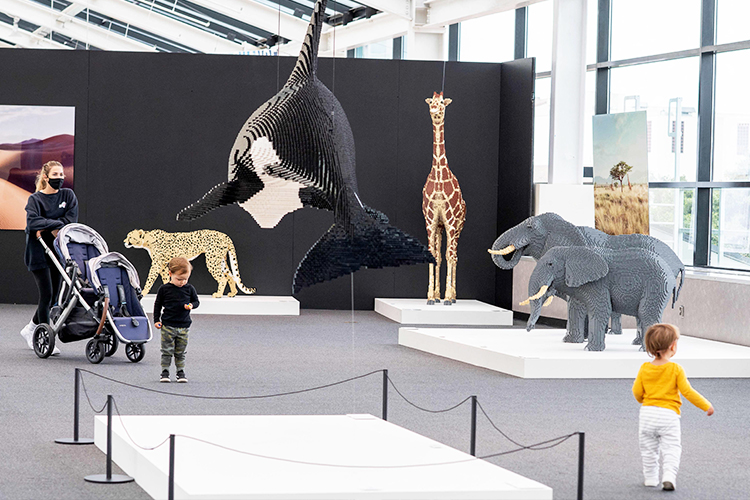
For the last year, Nathan has a new element to his Art of the Brick exhibit. Working with Australian-born photographer Dean West, they created the PERNiCiEM Collection. PERNiCiEM is Latin for extinction. This part of the Art of the Brick exhibit highlights endangered species with a mix of Nathan's LEGOs and Dean's photography. They feature fascinating facts about 18 animals in 19 exhibits. Included are where on the ICUN Red List of Threatened Species these animals are and why their numbers have diminished. (Spoiler alert--human threat to habitation or humans themselves are often the cause.)
 
The message in their collective art is that it is imperative to work to save our planet from climate change, deforestation, declining sea ice, polluted waters, and loss of species and biodiversity--for if we don't and these animals become extinct, only the plastic, LEGO-fied versions of these animals will be left. Reality will cease to be that, instead going more toward an artificial reality where we can only see these animals in their natural habitats through art, photography, or a digitized version of our world. 
 
 
The showcased animals in PERNiCiEM were created by Nathan, then they were taken to their natural oceanic, forest, grassland or arctic habitats and photographed by Dean.  The included animals:
  • African Elephant
  • Arctic fox
  • Beluga whale
  • Chilean flamingo 
  • Cheetah
  • Giraffe
  • Hawksbill turtle
  • Humpback whale
  • Malayan tiger
  • Military macaw
  • Northern white rhinoceros 
  • Orca
  • Polar bear
  • Reef shark
  • Sumatran orangutan
  • Vaquita
  • Western lowland gorilla
  • Whale shark
This is not the first time that Dean West & Nathan Sawaya have worked together. They are also featured in the "In Pieces" exhibits marrying Dean's photography with Nathan's LEGO creations in a series of several works of art.
 

Saturday, October 9, 2021

Survival of the Fittest

We can thank Charles Darwin and his evolutionary theory for enlightening us to the concept of "survival of the fittest." (Frequently it leads me to think of Social Darwinism and how that same concept is at play, but I digress.)

The survival of the fittest is still at play today as animal adaptations are still underway, as Katie Hunt shares in her Sept. 7th CNN article "Animals Are 'Shape Shifting' in Response to Climate Change." Highlighting research from Australia (which is featured in the journal Trends in Evolution and Ecology, Hunt shares that some of the "shape shifting" include:

  • Beaks, wings, legs, and ears for some animals are getting bigger to help deal with the heat and regulate their body temperatures as global temperatures continue to rise. (Birds in particular.)
    • The Australian parrot's beak size has increased an average of 4%-10% during the 150 years between 1871 and 2021.
    • Shrews and bats have also been following suit with their ear, tail, wings, and leg sizes.
  • Some species are getting smaller. Smaller body mass holds less heat.

There is some question about causality and correlation--are the adaptations truly survival-related, are they just happening simultaneously, and are they positive or negative changes? Sometimes there are just too many variables. But evidence has shown it is a growing phenomenon. 

Time shall tell, and may prove Darwin right!

Quotes from https://www.slideshare.net/stephendaviscxo/charles-darwin-quote

Wednesday, October 6, 2021

How is it October?

Every day the world keeps turning, spinning on its axis, traveling around the sun. 

Never is it more evident than when seasons begin to change. Same too with that monthly flip of the calendar. Last week with that flip to October and seeing the holiday decorations appear at school, it hit me harder than usual. In pondering the reason, it's probably because of the settling into school and the lingering of pandemic lifestyles. We've lived a lot outside, and the fall where I live is shaping up beautifully, but those outdoor experiences are starting to feel numbered. 


But, the comment in my image above struck me: autumn is the season that us that shows us that change can be beautiful.  We often get stuck in the quagmire of fear and the vulnerability or discomfort that is associated with change. But it is with this seasonal shift that we can take notice of the bounty:
  • Scampering squirrels, tucking away their treasure trove of nutty treats.
  • The color blast of reds, yellows, oranges, and browns adorning our trees.
  • The changing temperatures, still warming us under the sun, but refreshing breezes that tame the day.
  • The crispness in the air that are a welcome relief to summertime humidity.
  • The warmth of flannel, fleece, sweatshirts, turtlenecks, jeans, and snuggling under blankets.
  • Fireside chats by backyard bonfires with warm beverages.
  • Migratory birds making way overhead, squawking as they head to warmer territories.
  • Apples and pumpkins, cocoa and hot chocolate, flavors and colors that have been missing for the year.
  • Festivals that crop up that have us basking in it all.
Given the wealth that surrounds, it's time to soak all of the sights and sounds of the season while we have it! 

Image created using my photo of the school decor that greeted me this week, created at www.canva.com.